Selective Silence: Celebrity, Empire, and the Politics of Moral Visibility
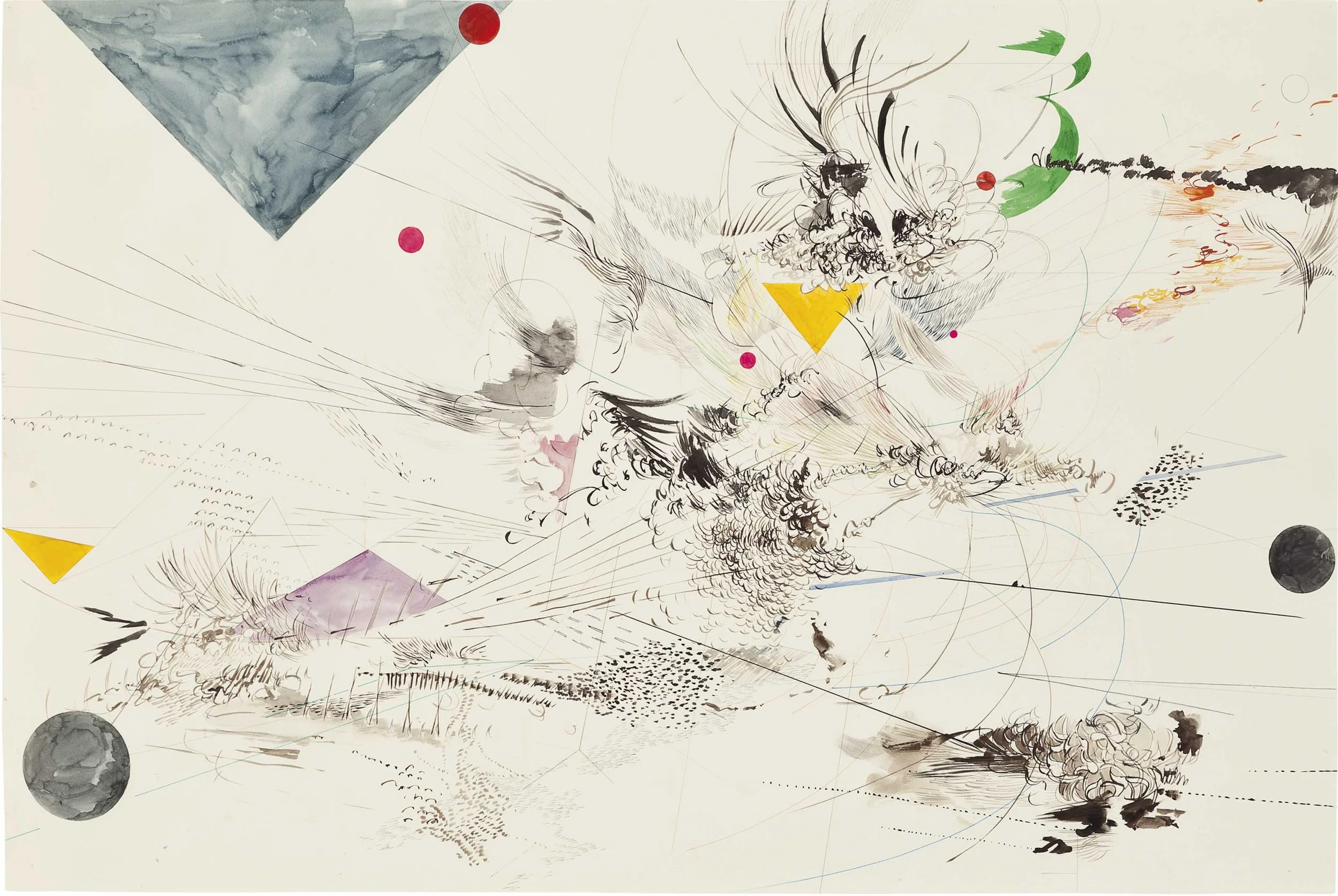
Julie Mehretu (b. 1970) Untitled. Via Christie’s
Public outrage over celebrity silence often reveals something deeper than disappointment. It reveals a collective desire for moral clarity in a culture built to avoid it.
Recent tensions involving Drake’s criticism of DJ Khaled’s silence on Palestine sparked predictable accusations of hypocrisy. Critics questioned how Drake—a Jewish Black artist who has also avoided sustained public condemnation of Zionism or explicit advocacy for Palestinian liberation—could publicly challenge another artist’s silence while remaining politically ambiguous himself.
But the deeper issue is not whether one celebrity spoke “correctly.” It is why modern celebrity culture so consistently rewards ambiguity in the first place.
Because under empire, silence is rarely passive. It is structured.
Identity Is Welcome Until It Becomes Politically Expensive
Modern celebrity culture thrives on identity. Difference sells. Marginalized identities become branding assets, aesthetic language, and marketable narratives. Palestinian identity can become cultural flavor. Jewish identity can become symbolic resilience. Blackness can become global cultural capital.
But only up to a point.
The moment identity begins making moral demands of power—rather than simply decorating it—the atmosphere changes. Visibility becomes conditional. Publicists intervene. Corporate partnerships become fragile. Political speech suddenly carries “risk.”
In this way, celebrity culture does not erase identity. It selectively curates it.
The entertainment industry is often comfortable with identity as performance, but far less comfortable with identity as obligation. Difference can be aestheticized, marketed, and celebrated as long as it remains emotionally expressive rather than materially disruptive. A celebrity can embody Blackness, Palestinianness, queerness, or marginality as cultural symbolism, but the moment that identity begins making concrete political demands—naming empire, challenging militarism, threatening corporate relationships, or disrupting dominant narratives—the boundaries of acceptable visibility quickly become clear.
Under these conditions, representation becomes conditional. Identity is welcomed most enthusiastically when it can be consumed without requiring moral confrontation from the audience, the industry, or the state itself.
And that distinction matters.
Because many of the same audiences celebrating representation eventually begin asking harder questions:
What does your identity require of you politically?
Is visibility enough without solidarity?
What happens when the community tied to your identity experiences mass suffering?
These questions create a tension modern celebrity is poorly designed to survive.
The Economics of Ambiguity
The public often frames celebrity silence as cowardice or indifference, but the reality is usually more structurally complicated than that.
Silence is frequently incentivized.
Major public figures operate inside systems built on sponsorships, partnerships, international markets, corporate relationships, algorithmic visibility, and public relatability across politically fragmented audiences. Clear moral positioning—especially on issues tied to empire, militarism, or Western geopolitical interests—can threaten all of these simultaneously.
Under these conditions, ambiguity becomes professionally rational.
This is why public statements from celebrities often feel carefully calibrated:
vague calls for “peace”
generalized condemnations of violence
appeals to unity without naming systems
grief without political specificity
The goal is not always persuasion. Often, it is survivability.
Empire does not require every public figure to openly support power. It only requires enough uncertainty, vagueness, and strategic silence to prevent widespread moral clarity from consolidating.
In this sense, silence becomes infrastructure.
Selective Courage and Reciprocal Scrutiny
At the same time, once a public figure chooses to publicly challenge another person’s silence, the conversation changes.
Critiquing someone else’s moral ambiguity.
This is part of why reactions to Drake’s criticism of DJ Khaled became so charged. People were not simply debating Palestine. They were debating asymmetrical accountability:
Who is expected to speak?
Who gets excused from speaking?
Which identities become politically legible, and which remain protected through ambiguity?
These conversations quickly become emotionally volatile because they are rarely just about celebrities themselves. They become symbolic arguments about solidarity, betrayal, fear, and selective moral visibility under systems that reward strategic silence unevenly.
…