No Press Allowed
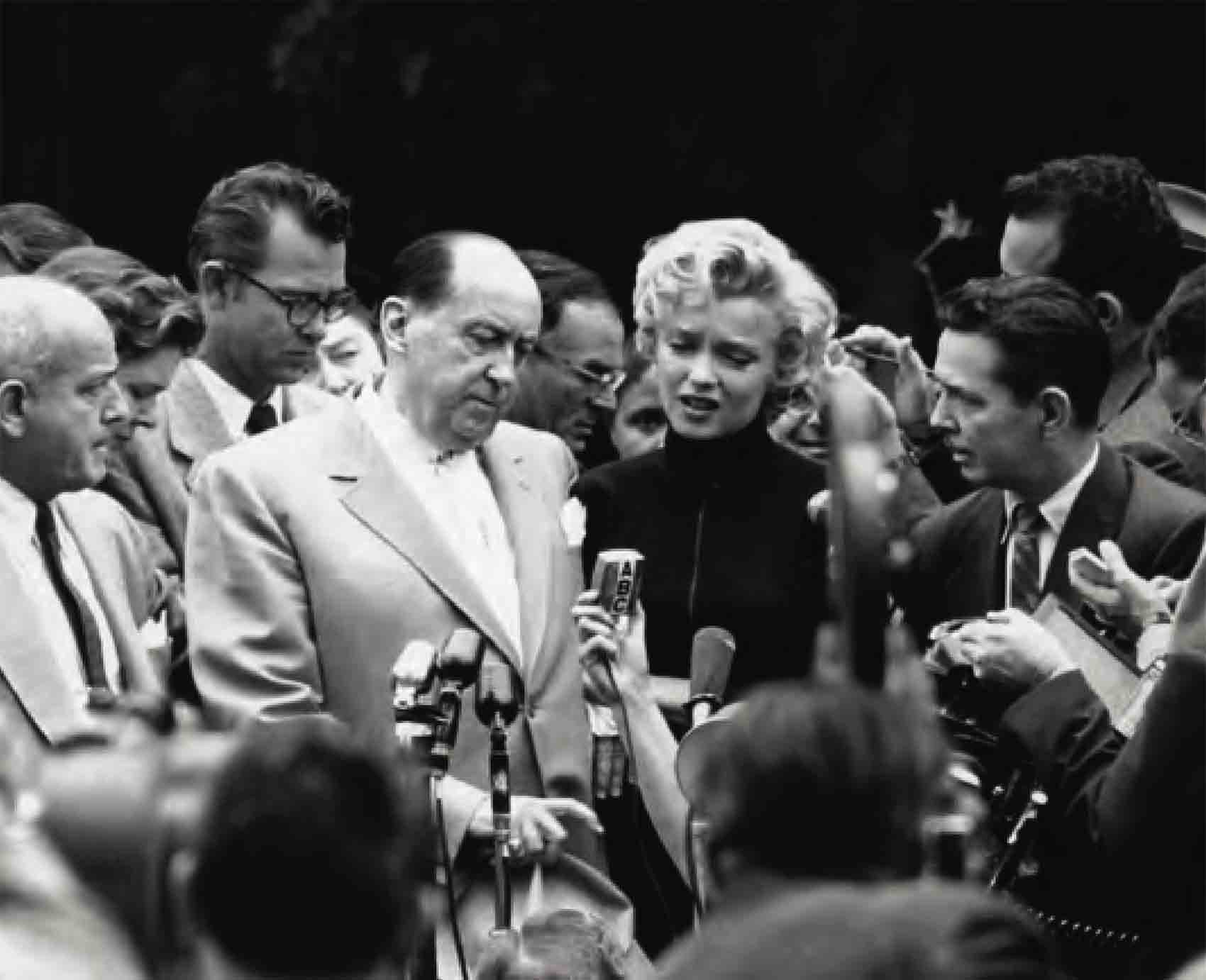
Marilyn Monroe, Press Conference 1954, via VP
The press badge sat on my desk for weeks until the ink started fading from the laminate. It was never used for Rosalía’s closed door show at Lisbon’s Primavera Sound festival, a performance staged for ten thousand people but closed to independent eyes. The images that reached the public came pre-approved, pre-lit, and pre-curated.
By midafternoon steel barricades circled the venue like polite cattle fencing, security checked credentials at every entrance, and names like mine were not on the list. Inside, the stage stayed dark while no photojournalists fidgeted with lenses and no critics scribbled notes. Nothing was left to chance as reality was scripted before it even happened. Only hired shooters waited for the director’s cue, moving with the easy confidence of people who know exactly what story they are paid to tell, and the only voices covering the night belonged to those who had paid for the stage. The rest of us were fed the finished product and told it was “truth.”
This is public coverage now, the messy, unpredictable work of witnessing was replaced by managed broadcast. When the only eyes in the room are commissioned to stay on message, the record ceases to be public and becomes a product. The awkward moments, the human mess, and the unflattering truths are edited out as if they never existed.
This same dynamic runs everywhere now. At protests, reporters are pushed behind police lines or ordered off the block altogether, journalists are detained despite clear credentials while courts repeatedly remind authorities that press protections still exist. When access shrinks, routine questions get treated as threats.
Months before the Lisbon show, I watched it play out in a municipal building three blocks from my desk in D.C. It was a routine zoning hearing on a damp evening in 2025. The hallway smelled of cheap coffee and dry-erase markers. A council aide with a heavy key ring stood at the threshold and declared the room full. An organizer, still catching her breath from the walk, stepped forward to ask why. Beside her, a reporter held up a laminated press badge. The aide did not look at either of them. She consulted a list, ignored the credential, and kept the door locked. I stood in the corridor and recognized the quiet machinery of exclusion. Small doors, closed often enough, quietly erase the public record.
Cultural institutions and global brands have perfected this model. They build in-house media teams that produce glossy documentaries and staged imagery, bypassing independent journalists entirely. They remove outside witnesses, control the frame, and hire promoters instead of documentarians. The operation becomes cleaner, cheaper, and far more obedient than dealing with the friction of a real press. But this control does not stop at concert halls or polished campaigns.
The logic of managed reality has real, often lethal, consequences around the world. This is not mere corporate branding. It forms part of a deeper architecture of power, funded by marketing budgets, enforced by private security, and shielded by state authority. In recent years, Israel has killed roughly two-thirds of all journalists slain worldwide.
The United States has given its explicit or implicit approval to the targeted assassinations of journalists in Palestine, Lebanon, and Yemen, arming the operations, shielding the perpetrators, while continuing to call itself a defender of press freedom.
Meanwhile, major press-freedom organizations based in the United States issue polite, measured statements. They shyly condemn the system that funds them, and that they in turn help sustain. Their timidity reveals the rot, when the institutions meant to protect truth are embedded within the empire that restricts it, independence becomes theatrical…