
The god of Order vs. the God of Liberation
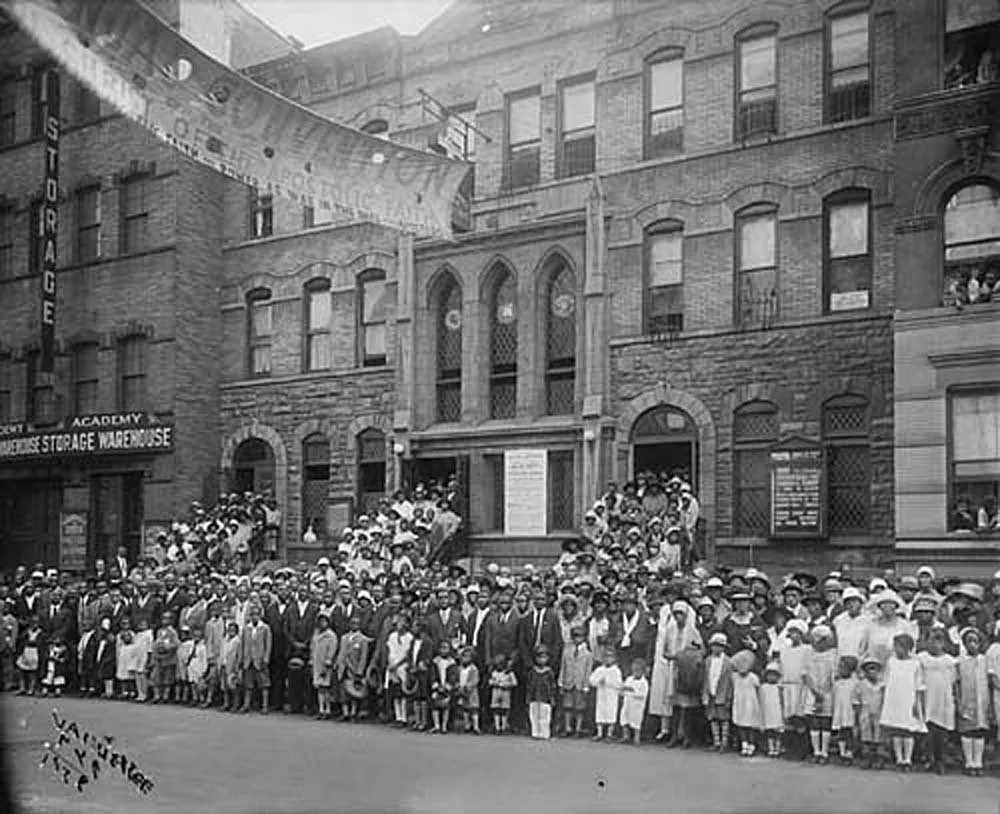
The Refuge Church of Christ (Sunday School?), Harlem, 1928. James Van Der Zee via New York The Golden Age
Why Authoritarian Power Recruits Religion
In moments of instability, political power rarely stands on its own. It reaches for something older, deeper, and harder to challenge: divine authority. When legitimacy begins to erode, governments do not simply tighten policy, but moralize it. They wrap enforcement in scripture. They frame control as righteousness.
This is not new. It is an old pattern.
Across history, whenever states have needed to justify violence, whether through slavery, segregation, or militarized borders, they have found ways to enlist religion. In the United States, pro-slavery theologians once cited scripture to defend human bondage as divinely ordained, while during Jim Crow, white churches framed segregation as part of a “natural” and God-sanctioned social order. Not because faith demands it, but because faith is one of the few forces powerful enough to quiet moral dissent.
What we are witnessing now is not the rise of religion in politics. It is the strategic deployment of religion to stabilize a system under strain.
The God of Order
At the center of this project is a particular theological construction: the God of order.
This god is invoked to defend borders, police, prisons, and punishment. This god values obedience over justice, stability over truth, hierarchy over human life. This god does not ask whether the system is just, only whether it is being challenged.
Under this framework, suffering becomes evidence of failure rather than consequence of policy. Poverty is reframed as personal deficiency. State violence becomes necessary discipline. Protest becomes moral disorder.
This is how brutality is made palatable. Not by denying it, but by sanctifying it.
Law-and-Order Theology in Real Time
You can see this theology at work in the present moment.
Calls for “law and order” are not simply about safety, they are moral claims about who deserves protection and who does not. Communities experiencing over-policing are framed as threats rather than populations subjected to structural harm. Migrants are cast as invaders rather than people navigating systems shaped by displacement, extraction, and global inequality.
Religious language reinforces these frames:
Obedience is elevated above justice
Stability is elevated above dignity
Control is elevated above care
When faith is used this way, it does not challenge power. It organizes consent by teaching people to interpret harm as necessary, to see enforcement as moral, and to view those who suffer under these systems as responsible for their own conditions. Sermons and religious messaging frame compliance with authority as righteousness, discouraging dissent even when policies produce clear harm. State violence is recast as protection, and those who question it are framed not as advocates for justice, but as threats to order itself.
But this is only one theological tradition, and not the oldest one.
The God of Liberation
Running parallel to the god of order it is a far more disruptive current: the God of liberation.
This God does not appear in defense of empire, but in opposition to it. In the Exodus story, God sides with enslaved people against Pharaoh. In prophetic traditions, rulers are condemned not for weakness, but for injustice. In the life of Jesus, imperial violence is not legitimized, but exposed.
…