
Cuba on My Mind. Part Two: My time and travels in Eastern Cuba
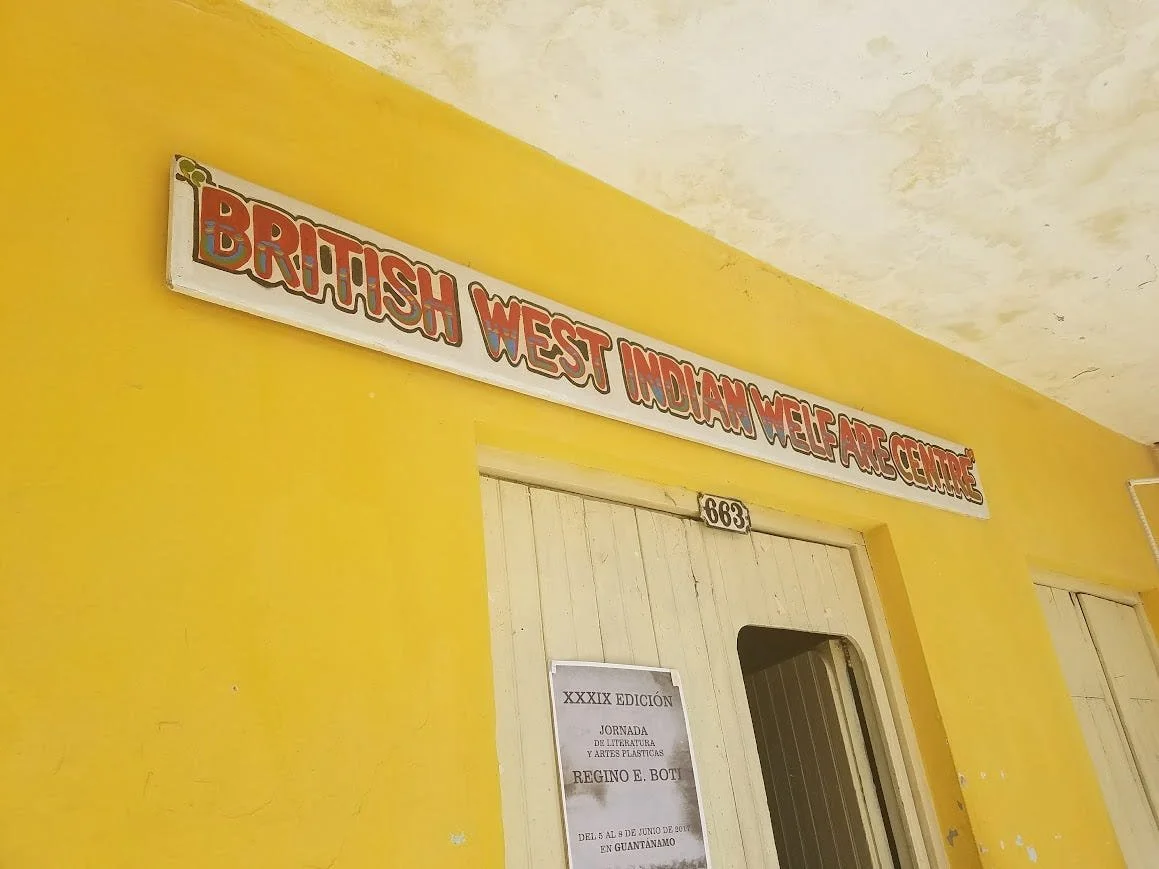
Photo provided by the author.
In 2016, I entered my doctoral program at Fordham and decided to intentionally intersect my times as a tourist to connect with Eastern Cuba. Habaneros informed me that the East was the Blackest and most Caribbean part of the island. My interaction with Rastafarian community members in Havana, Cuba, also deepened my interest in the East. Additionally, my family and friends have fluid cross-cultural upbringings as Cubans of Jamaican descent and Jamaicans of Cuban descent in the United States.
I took a 16-hour bus ride across the island to Santiago de Cuba and then two motorcycles, a local bus, and a “dollar-van” Ford military-style truck to Guantánamo City. This was my first visit to the British West Indian Welfare Centre. It was 2017.
My heart skipped a beat when I saw “British West Indian Welfare Centre” in front of a bright yellow building and decided to ask neighbors about the center. Within the next 5 minutes, the organizational leaders, such as BWIWC President Jorge Derrick, greeted me excitedly as if he were expecting my arrival. The quaint space was filled with countless rocking chairs, flags from across the Caribbean, and posters of Jamaican national heroes: Paul Bogle, Marcus Garvey, and Nanny of the Maroons. Sipping on fresh pineapple juice, I was shown archival materials, including photographs and meeting notes, from the organization’s inception.
The British West Indian Welfare Centre is a community fixture in Guantánamo City. Locally called “the Centre,” the organization holds social, cultural, and political importance for Anglo-Caribbean descended communities and Cubans of a wide array of backgrounds. The Centre is located at the intersection of Narciso López and Serafín Sánchez Streets. A neighborhood with wide roads and slender walkways, and a somewhat random railroad track, interlaced with white and colorful colonial-era buildings housing schools, private homes, municipal edifices, and small businesses. With the organization physically situated on the same street as Casa del Changüí and Tumba Francesa, BWIWC is placed within the major cultural corridor of Guantánamo City, representing a microcosm of art, music, and societal contributions of the Black presence in Eastern Cuba and within Cuba itself.
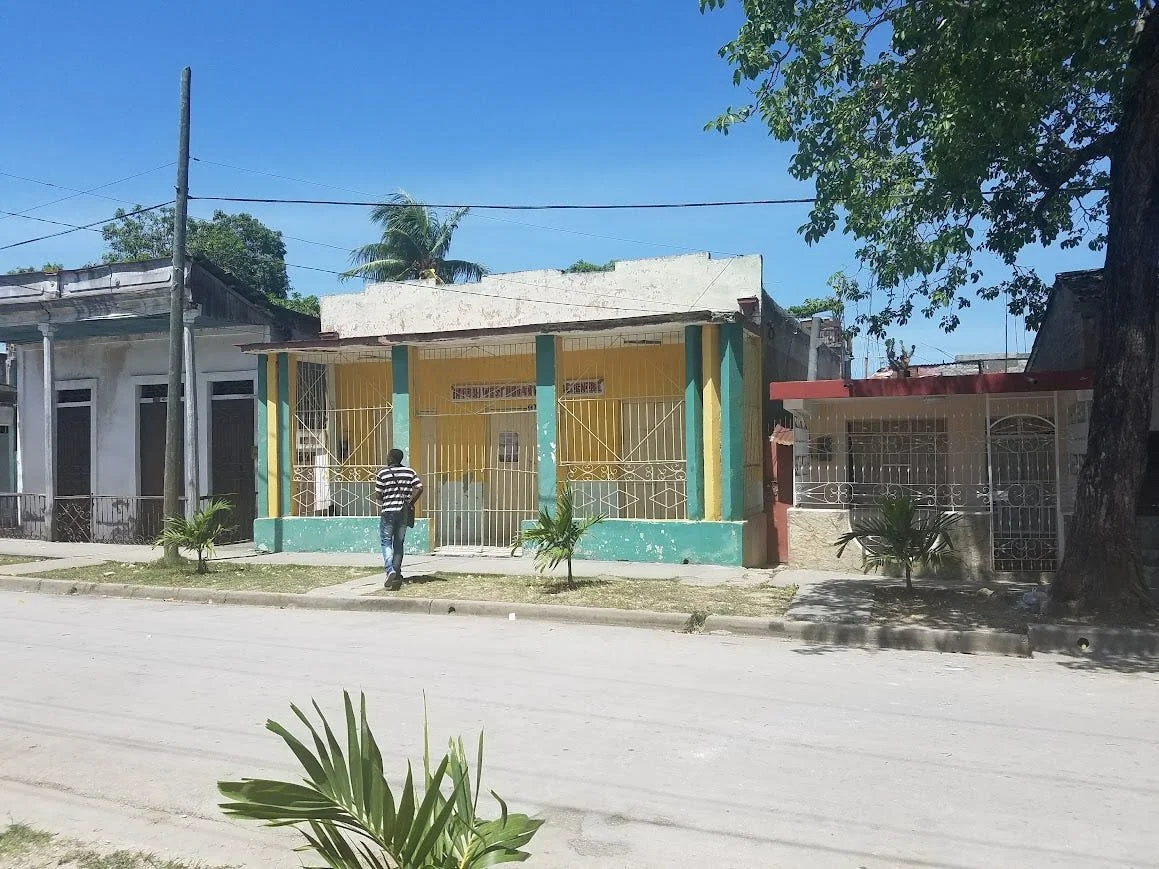
Photo provided by the author.
The majority of English-speaking Caribbean communities arrived in Cuba after the Spanish American War and the US’s self-imposed installation as the neocolonial ruler of the island. As stated in Part I, the US Platt Amendment of 1903 became a part of the 1902 Cuban Constitution, instituting the right of the US to intervene militarily, control much of the country’s economy, and establish a naval base in Guantánamo Bay. The US used its hegemonic and military powers during this era to brutally occupy Cuba six times until Franklin Delano Roosevelt’s Good Neighbor policy of 1936. From this new foreign policy strategy, the US supported “friendly regimes”—led by heads of state and dictators such as Fulgencio Batista, a controversial figure because of his overt support of the US government and US-based mob ties—until the 1959 Triumph of the Cuban Revolution.
During the first 30 years of the Cuban Republic, over one million immigrants arrived to work in the sugar industry. More than 300,000 of these immigrants were from Haiti and the English-speaking Caribbean. According to the 1899 census, they migrated to Eastern Cuba adding to the population of about 600,000 Black and Afro-descended Cubans living across the island, with the majority in the East.
The British West Indian Welfare Centre’s existence gives a record of the history of Eastern Cuba, or Oriente province, as a focal point of Black Caribbean immigration generally and the Black English-speaking Caribbean diaspora specifically. Within Oriente, the regions of Guantánamo, Santiago de Cuba, Bayamo, Holguín, and Victoria de las Tunas, as well as other towns in Cuba such as Preston, Banes, Mayarí and Baraguá, all hosted early communities from Jamaica, Barbados, Trinidad, etc. Early on, as their employment was attached to emerging US agricultural industries, immigrants and migrants from the English-speaking Caribbean lived next to sugar mills. However, as the US naval base in Guantánamo Bay began offering jobs to English-speaking laborers, Guantánamo City and the nearby towns of Caimanera and Boquerón became central locations for communities to build and grow. Black immigrant communities would live in the city or peripheral areas of the city with their families.
These multicultural Black Cuban families are an important part of Cuban and Cuban American history and culture. In addition to her film on Assata Shakur, documentaries by Cuban director Gloria Rolando give light to the history of Eastern Cuba and migration stories from Jamaica, Haiti and the Cayman Islands. Through the family history of the Cuban-Jamaican Foster family, Pam Sporn’s Cuban Roots/Bronx Stories expands this history to include a diasporic connection from Jamaica to Eastern Cuba and the Bronx, New York. In his autobiography, Alberto Jones, a Black Cuban who advocated against the embargo on Cuba and for a more progressive US-Cuba policy, also shares his family history that includes the British West Indian Welfare Centre, Banes, Guantánamo City, and the Bronx.
“When Papa was at GTMO…”
This history pieces together a common phrase that moved through stories of my family history: “When Papa was at GTMO…” A phrase that seamlessly webbed through narratives about my family’s life in a small mountainous village in Eastern Jamaica. My grandfather worked at the Guantánamo Naval Base throughout my mother’s childhood, presumably from the 1950s to the 1970s. He would come back from 3-6-month rotations at the base with Dove soap, large tin bins of saltine crackers, American candies, and money to add to my grandmother’s land buying and agricultural projects. My trip to Eastern Cuba began with the question of why and how my Jamaican grandfather went to GTMO. I paid more attention to these stories as a teenager when the base became a notorious prison camp after 9/11 and the United States war on Iraq and Afghanistan. These stories were always peppered with political commentary about Jamaican Prime Minister Norman Manley’s support of Cuba and its costs.
Cuba has always been a part of my family’s narrative. My Jamaican family’s out-migration to the Spanish-speaking Caribbean and circum-Caribbean is a part of my interest and investment in connecting and understanding Cuba. Eastern Cuba, Oriente, and Guantánamo are a part of my family history. When going to Eastern Cuba for the first time in 2017, my mom instinctively asked me to look for traces of our ancestors. To see if prospective long-lost family members with Jamaican last names like “Betty,” “Miller,” “Dean,” or even “Kemp” (my Scots-Irish white ancestry) were there. And without me asking, the director of the BWIWC, Jorge Derrick, and members requested my surnames so they could find my Cuban family. Traveling back East in successive years, Derrick has found a web of cousins and provided support to keep going with my dissertation project. Communities from and in Eastern Cuba have become a part of a council of elders on the island that have pushed me to finish my dissertation and complete my PhD program.
Cuba is on my mind.
Cuba is on my mind. Cuba has taught me how to really dance salsa and the electric slide with an extra whine; how to cook black beans (with and without coconut milk); how to speak Spanish with confidence and welcomed correction; how to be Black in all ways; and how to politically be Caribbean and in solidarity with the Global South. I travel to Cuba as a tourist, a historian, and a cultural collaborator. Havana is extraordinary! However, the Eastern Cuban cities of Santiago de Cuba and Guantánamo City have had a profound influence on my life. Historically and culturally understanding and connecting to Eastern Cuba, which was Oriente province the first 70 or so years of Cuba’s history, is truly understanding Cuba. Interlinked with the histories of Jamaica and Haiti, Eastern Cuba was and still is the Blackest part of the island. The East has been historicized and even feared as the “Haiti” of the island, the “Soviet” stronghold of Realengo 18, the Mississippi “Black Belt” of Cuba reverberating with Changüí from the Sierra Maestra mountain range, a region where decolonial rebellion is rooted.
Photo provided by the author.
At the turn of the 21st century, propaganda around Assata Shakur’s exile in Cuba intersected with the sensationalism around the Elián González custody case within mainstream media. Although the narrative from the US perspective was clear, for me, at the age of 14, Cuba became an enigma wrapped in the historical significance of radical Black politics. It would be hard to explain to a 14-year-old self all that the people of Cuba and the history of the island would come to mean for me. I still find difficulty in explaining the feeling of sitting on the back of a motorcycle, balancing a tupperware of black beans with one hand and my laptop bag in the other. Or the existential lightness of dancing the Cuban electric slide under the brightest moonlight in Guantánamo City. I moved in sequence with Black Cuban women, who have become my cousins, as they gave the diasporic “Aye!”. I took no photos or videos of most of these moments. My phone was probably dead or full, but I also wanted to feel the unrealness and levity of these spaces.
Within this time of total aggression against an island I love and people that have become my family, there are collective experiences of heightened awareness, stillness, and instability. Initial resources from international support have dwindled; the US has doubled down on aggression towards activists who have traveled to Cuba in solidarity, along with a trumped-up indictment against 95-year-old former Cuban president Raúl Castro. This is compounded with increased blackouts across the island. Additionally, US media outlets such as The Guardian and Axios are working overtime to manufacture consent for a military assault on the island.
Had it not been for the warmth and connectedness of Eastern Cuba and the British West Indian Welfare Centre, I would not have received my PhD or finished my dissertation. As we collectively advocate against the brutal blockade, destabilization, and constant threats of military occupation of Cuba, it is important to also look and expand our advocacy to the East. The people in Eastern Cuba are looking for our support, voice, connection, and advocacy. I know I owe a lot, so I am going to give all that I have.
#SupportCuba #SupportEasternCuba
In addition to supporting the organizations listed below that provide political and material support to Cuba, please support the author’s fundraiser for the British West Indian Welfare Centre in Guantánamo, Cuba. BWIWC is in need of more solar panels and funds for food and general community needs. All donations go straight to BWIWC. See the following link for updates and information on how to support - bit.ly/bwiwc.
The National Network on Cuba - @nationalnetworkoncuba
Black Alliance for Peace - @blackallianceforpeace
Cuba Sí NY/NJ Coalition - @cubasinynj
Cuban Americans for Cuba - @cubans4cuba
Interreligious Foundation for Community Organization (IFCO) - Pastors for Peace - @ifco_pastors4peace
The People’s Forum - @peoplesforumnyc
For News Follow - Belly of the Beast