
Cuba on My Mind
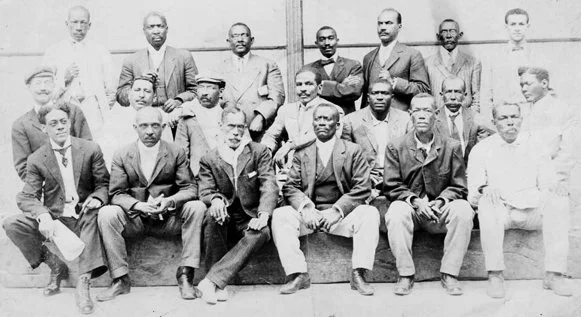
Partido Independiente de Color via Afrocubaweb
Part One
traveling to Cuba
I have been traveling to Cuba for over 10 years. In November of 2015, I arrived for the first time for a conference at the University of Havana. With free time in the convening schedule, I walked down the streets of the backroads of Old Havana. I passed four-story colonial-styled homes, which lined the streets packed tightly and were colored in light teals, pinks, and off-white. An older Black man and his grandson stood at his door and shouted in English, stern but inviting: “We are Black here!” My Spanish was rudimentary, so I replied back, “I know,” and smiled. He stated back, “Inglaterra,” implying that I may be a Black British visitor. I said, “No, jamaicana,” not claiming the political weight of the American passport in my bag. He returned my statement with a smile and nodded with connection and approval. His grandson, about five years old, attentively watched the diasporic rhythm of our interaction.
I used my Blackness and Caribbeanness in my early travels to Cuba, when my Spanish would not suffice. Dancing, laughing, cooking, and sharing as I wore head scarves, braids, flip-flops, and shorts—I moved around with ease because I looked Cuban (aka a Black diasporic young lady). I created a footprint of my favorite and frequented shops, parks, and places to sit and get Wi-Fi. I loved seeing the same faces on my preferred Havana running route from San Lazaro past Antonio Maceo’s statue and then the fort at the end of the Malecon. At that time, I traveled to Havana for conferences and Spanish lessons. This was during the softening of US/Cuba relations in the Obama administration and the opening of travel restrictions, while also raising the bounty on political exile Assata Shakur. I was among the crowds of Cubans that lined the street to see the caravan of the US’s first Black president. This period signaled a possible end to the blockade initiated in October of 1960 by the Kennedy administration, but with concessions.
history, a free-ish Cuba, and US foreign policy
Cuba has a deep and complex history with the United States, the latter shifting from ally and partner to occupier and neocolonial overlord. Our contemporary understanding of this relationship stems from the Spanish American War of 1898. After thirty years of anti-colonial war with Spain to gain independence, the US came into the war with promises of liberation and support of a “Cuba Libre” (Free Cuba).
When the US implemented the Teller Amendment in 1898, stating war aims as altruistic and anti-colonial, most of the anti-colonial Cuban exiles US officials came across or welcomed in their midst were white. However, the Cuban Wars of Independence (1868-1898) were Black-led, collaborative within the Caribbean, and anti-slavery at their core, with figures such as Antonio Maceo, Rafael Serra y Montalvo, and José Quintín Bandera leading the charge. The first two wars, 1868-1878 and 1878-1879, were abolitionist and anticolonial at their base. After slavery in Cuba was abolished in 1886, the last phase of the war (1895-1898) advocated for total independence from Spain.
In the midst of the Spanish American War of 1898, US military officials and the US press soon began to change their tone, understanding that almost 70 percent of the Cuban Independence Army was Black and of African descent. When the war ended with the 1898 Treaty of Paris, the United States’ imperialist and anti-Black aims were exposed. The US would replace Spain as colonizer, taking by force the Philippines and, with the support of white Spanish Caribbean accommodationists, Puerto Rico and Cuba. While Puerto Rico became a colony, Cuba was exploited as a neocolony, where the US maintained control over its political and economic systems while allowing for limited self-governance.
In 1899, while Cuba was under military occupation, the US government organized a census, which confirmed the Black identity of the island. They counted almost 33 percent of Cuba’s population as Black and of African descent, with the majority living in the eastern part of the island. Much of Cuba’s counted white population was Spanish-identified, meaning not native-born Cubans and/or Spanish loyalists. To the dismay of US authority, Black Cubans were deeply a part of the thirty-year independence movements and expected citizenship, voting rights, and a place in the new Cuban republic.
Cuba’s neocolonial status was calcified by the Platt Amendment of 1903, which was conferred by the US Congress and placed into the new Cuban republic’s 1902 Constitution. Cuba became free-ish. The Platt Amendment authorized US military intervention and occupation of Cuba and a naval base in Guantánamo Bay. The US officially occupied Cuba many times during the first thirty years of the 1900s, attempting to quell anti-colonial movements against the US and turmoil caused by extractive economic policies. The US military even assisted the elite white Cuban establishment in the genocide of 5,000 Black people, including Black veterans and their families, during the 1912 massacre of the Partido de Independiente Color in Eastern Cuba.
Within the ebbs and flows of this US and Cuba entanglement, the first 60 years of Cuba’s history as a “sovereign” republic, the United States has always held the cards. From economic exploitation in the sugar industry to the mob-funded tourism of Havana and the military-industrial complex of Eastern Cuba, the US used Cuba’s position to assert authority over the Western Hemisphere and the Caribbean and circum-Caribbean. This was until the Cuban Revolution of 1959.
The Cuban Revolution transformed the island from a US quasi-colonial outpost and proxy state (similar to what Israel is today) to a vanguard of decolonial thought and military strategy for all of the Global South. Fidel Castro’s and Che Guevara’s impressive role in decolonization movements in Angola, Guinea-Bissau, South Africa, Palestine, and here in the United States will never go without notice. Particularly in Africa, Black military leadership such as Victor Dreke and all-Black units stood at the helm of these efforts. With a blockade beginning in October of 1960, the US has always positioned that if Cuba stayed out of these movements in the 1960s, ‘70s, and ‘80s, alongside stepping out of its role as a Soviet-backed communist country, the sanctions would stop and normalization would begin. However, Cuba’s stance has always been unwavering. In turn, the US government has punished Cuba for its position and advocacy throughout the Global South.
The blockade of Cuba has only been a small piece of retribution, and the US’s impulsive need to “take” Cuba and re-institute a neocolonial status. From the 1961 Bay of Pigs to the recent attempted terrorist attack on the coast of Cuba in February 2026, anti-Castro/anti-Cuba hardliners have been integral in pushing this narrative and collaborating with the US government in the most perverse ways to stop growth within the island and the country’s sovereignty. These Cuban American and émigré hardliners are usually racially white, anti-Black, and deeply conservative, supporting and reenacting Juan-Crowism through a litany of overt anti-Black policies; violent political organizations that have carried out assassinations and violence in the US (from Omega 7 to Proud Boys); and their depraved political stances.
Although Cuban American hardliners have the loudest voices, there have been a wide array of Cuban Americans from progressive to leftists that advocate for Cuba’s sovereignty and the Cuban people from 1959 to now. However, no matter the pushback, the hardliner agenda of misinformation, threats, and brutal violence is layered into US policy. This agenda has hurt the most vulnerable in US and Cuban societies alike.
Additionally, the recent targeting of Cuban immigrants for deportation and detainment resulted in the death (which was ruled a homicide) of Cuban immigrant Geraldo Lunas Campos in ICE custody. This documents a drastic change in US foreign policy on Cuba, where since the 1960s migrants received a preferential status. This was comparatively true even during the Mariel and Balsero eras of the 1980s and 1990s, when more Black and brown Cubans migrated to the US. These migrants were criminalized within the media and generally treated with suspicion by Cuban Americans of earlier migration periods.
Where we are now…
At the moment, we are long gone from the possibility of a total end to the blockade on Cuba. In 2016, the Tr-mp administration placed Cuba on the state-funded terrorist list. Then, segregationist/apartheid-happy Biden kept Cuba on the list and did not stray away from the US’s obsession with Assata Shakur. Now from the depths of the hell of another Tr-mp administration, the obsession with Cuba has become “personal” with Mark Blonde (M-rco R-bio) at the helm leading US foreign policy. While Washington was in Havana a couple of days ago (and may be still there) for “talks” with Cuban government officials, this administration is known for untruths, half-truths, and fake promises. Thus, there is a lot of uncertainty on the impact of these talks as the Tr-mp administration makes very impulsive military threats in the media against Cuba’s sovereignty.
The blockade has always been a form of genocide. In this era, the US is choking Cuba by cutting off regional allies, pointing to a blatant and unrestrained refashioning of colonial/anti-Communist policies of the 50s, 60s, and 70s. This administration has heightened the “War on Terror” policies with the “War on Drugs”: threatening Mexico’s sovereignty, kidnapping Venezuelan president Nicolas Maduro and his wife, indiscriminately blowing up fishing vessels throughout the Caribbean, and barring petroleum from entering the island. Along with old tactics, the US overtly uses Israel’s tried, true, and tested playbook in its genocide of Gaza, Palestine, and the West Bank.
There is fear and uncertainty about how impending overt US military aggression toward Cuba will affect the island and if there is any way to deter it. Especially in the moment when the US’s war on Iran has produced a major global embarrassment for the warhawk Epstein class.
We can never forget about Cuba—it is a matter of life and death for Cubans and for us ALL.
We will never stop advocating for Cuba’s sovereignty amidst this reinvigoration of US aggression on the island and its people.
In addition to foodstuff from Mexico and China, oil rigs from Russia, and a Turkish floating power plant, I commend the visits from cadres of activists and organizations that have brought everyday items to the island and its hospitals, as well as needed dollars into its tourism sector. This is all very important and impacts everyday Cuban communities.
The sanctions on petroleum and cutting the country off from its diplomatic relationship with Venezuela have instituted blackouts lasting 22 hours (and more) a day. This has compromised the agricultural sector, everyday transportation needs, and storage and refrigeration. The blackouts have become increasingly deadly for the elderly, newborns, the disabled, and everyday people in need of hospital care.
The US policy of genocide and destabilization of Cuba must end.
In the meantime, support initiatives that give to Cuba with full hearts, large suitcases, and overfilled flotillas, and join their efforts when possible.
Support everyday Cubans and the sovereignty of their country.