
The Quiet Crisis I See Every Day in Schools That No One Is Talking About
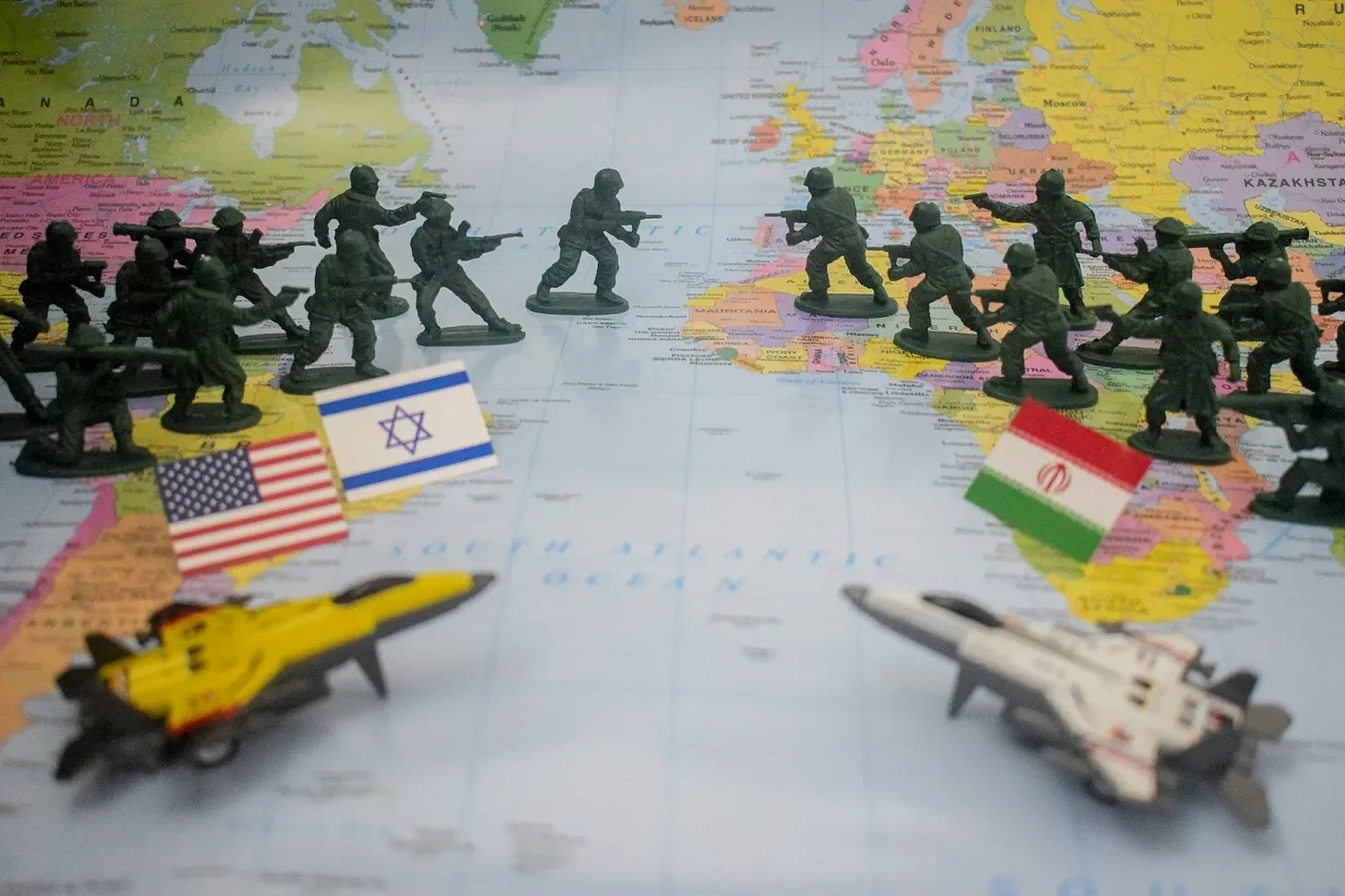
Photo by Saifee Art on Unsplash
My editor asked me to write about the war in Iran and what students think about it. Here’s the honest answer: most of them don’t. And that terrifies me far more than the war itself.
On February 28th, the United States and Israel launched strikes on Iran, killing the Supreme Leader and pulling the region into an expanding, open-ended war. Thirteen U.S. service members have been killed. Civilians—including 165 children inside a girls’ elementary school in Minab— are dead. A genocide in Gaza has been unfolding for over a year. The Congo continues to bleed. And I walk into school every morning and watch teenagers scroll past all of it without flinching.
When I brought it up in a classroom recently, I got shrugs. And then: “Ms., that doesn’t affect me.”
I’ve been in education long enough to know the difference between a student who doesn’t understand something and a student who has simply stopped feeling it. What I’m watching in schools right now is the latter. And nobody is sounding the alarm loudly enough.
They Aren’t Cold. They’re Exhausted.
Here’s what I need people to understand: these students are not bad kids. They are burnt-out, overstimulated, and emotionally fatigued. The difference is significant, and conflating the two is dangerous. Research confirms that constant exposure to distressing news doesn’t make young people more empathetic. It makes them numb. The brain, overwhelmed by an unrelenting feed of violence and crisis, goes into self-protection mode. Compassion fatigue sets in. Apathy becomes the armor. For children especially, this constant bombardment replaces the capacity to sit with someone else’s pain with a reflexive skim of the surface.
And the data backs up what I see. That same research from the University of Michigan found that college students score roughly 40% lower on empathy measures than students from two or three decades ago, with the sharpest drop happening after the year 2000. We cannot keep teaching students to solve for x without teaching them how to feel for each other.
We Built Schools That Teach Standards, Not Souls
Schools aren’t innocent in this. Not even close.
Researchers have named it “the silence curriculum,” an institutional failure to acknowledge grief, trauma, and emotional distress inside school buildings. The prioritization of test scores over psychological safety is not accidental. It is a choice we keep making, and our students are paying the price.
Eighty-three percent of principals reported using a social-emotional learning curriculum in 2024, but even those programs are under fierce political attack and losing funding. And honestly? Even where SEL exists, we’re still getting it wrong. The biggest mistake I’ve seen throughout my career is treating SEL like an elective—a separate subject to be scheduled and checked off rather than a living practice woven into the fabric of everything we do. SEL doesn’t need its own formal curriculum, which often becomes an additional burden for teachers to internalize. It should be taught and modeled in every interaction, every micromoment, every time a teacher decides how to respond to a struggling student or an administrator decides whose pain is worth addressing. It should be embedded in school policy, in the values a building actually lives by—not just the ones on the wall. When it isn’t, we end up with exactly what we have now: students who are completely divorced from what it means to be a person navigating a human experience. Students who don’t know how to grieve, how to care, or how to show up for someone they’ve never met.
Proximity Is Not a Prerequisite for Pain
“It doesn’t affect me” is not a statement of fact. It is a statement of disconnection—and disconnection, left untreated, compounds into apathy.
Everything is connected. The war in Iran is already affecting global energy supplies. The ongoing genocide in Gaza, the mass atrocities in Congo, the displacement of millions of people—these are not distant tragedies. They are shaping the world your students will inherit. The policy that comes from this conflict shapes the economy, that shapes the neighborhood, that shapes the classroom, that shapes the child sitting in front of me every morning.
What we fail to feel, we fail to fight. And a generation that cannot grieve what is happening in Iran, in Gaza, in Congo, cannot be trusted to build anything better.
…