
Wounded, Untreated, and Lethal: The Male Crisis Nobody Is Diagnosing
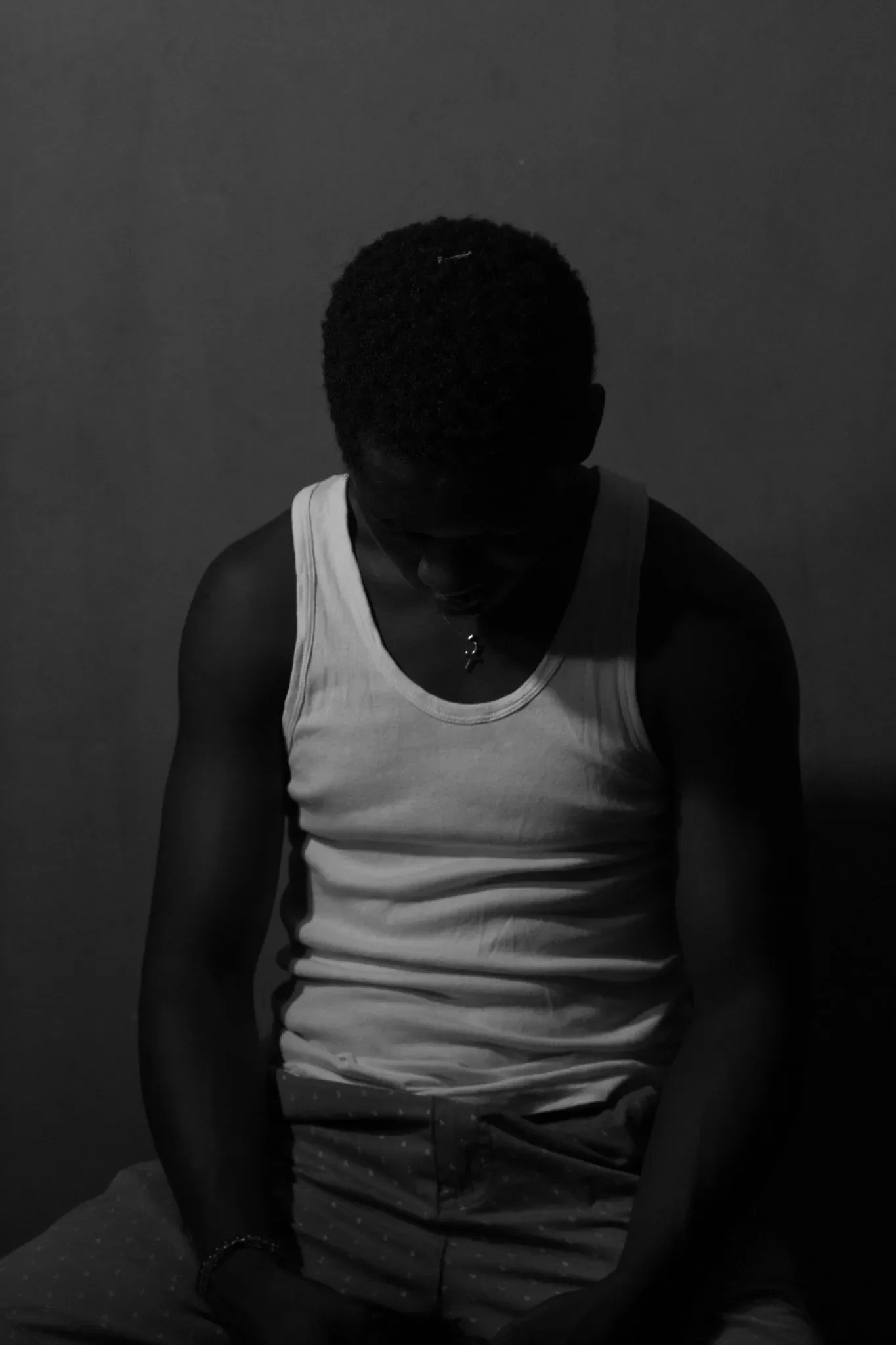
This question has been sitting in the back of the mind of every Black woman paying attention for a long time now, and in recent weeks it has gotten louder and more urgent and more impossible to ignore. Why do men hate women so much—and why, in 2026, are they still killing us for it?

Last Sunday, Shamar Elkins shot his wife Shaneiqua Pugh in Shreveport, Louisiana, and then turned the gun on seven of his own children—ages three to eleven—and another child in the home, leaving eight children dead and two women wounded. Days before that, former Virginia Lieutenant Governor Justin Fairfax shot his estranged wife, Dr. Cerina Fairfax, in their home and then turned the gun on himself, leaving their two children to find them. And somewhere between those two tragedies, influencer Ashlee Jenae was found dead in a hotel room in Zanzibar—her birthday trip with her partner ending not in a proposal but in her death, her family notified not by him but by the hotel. Four months into 2026, story after story after story: Black women killed by husbands, partners, the fathers of their children—acts of violence so senseless they begin to blur together, and yet each one is devastatingly, irreversibly distinct.

This is not a coincidence. This is not a cluster. This is a pattern with a long, documented, uninterrupted history—and it is accelerating.

Black women are two times more likely to be murdered by men than their white counterparts, and more than nine in ten Black female victims knew their killers. The home—the place women are told is their refuge, their safety, their reward for choosing right—is statistically the most dangerous place a Black woman can be. And still, the culture that produces these men, the digital pipelines that radicalize them, the institutions that quietly cosign their entitlement, continue operating without interruption. And still, when the bodies are found and the vigils are held, the conversation that follows somehow finds its way back to what the woman could have done differently.

The Diagnosis Nobody Is Making

Here is what is true and what nobody with a platform seems willing to say plainly: men are unwell, and their unwellness has been protected, enabled, and in many cases celebrated for so long that it now reads as personality rather than pathology.

Men are socialized from birth to externalize everything—pain becomes anger, fear becomes aggression, shame becomes control, and vulnerability is so thoroughly conditioned out of them that by adulthood most men have no internal language for their own suffering, so it comes out sideways, aimed outward, aimed at the people closest to them, usually the women who loved them most. They are emotionally illiterate in a world that never required emotional literacy because power protected them from the consequences of not knowing how to feel. They were never taught to hurt quietly. They were only ever taught to make someone else responsible for the hurt.

The structure of patriarchy—which men built and from which men benefit—damages men too, just differently and with far less lethal consequences for everyone around them. It tells men that their entire worth is tied to dominance, provision, and control, which means the moment any of those things are threatened—a job loss, a woman leaving, a perceived disrespect, a divorce agreement with a court deadline—the identity collapses completely, because it was never built on anything internal to begin with. There is nothing underneath the performance. When the performance fails, the violence begins.

For Black men specifically, this is where the analysis gets more layered and more painful and more necessary to name honestly. Black men are carrying the compounded trauma of racism, of centuries of systematic emasculation by white supremacy, of a society that has criminalized their existence while simultaneously telling them that real men dominate and provide and control—and the hypermasculine overcorrection that developed partly as survival and partly as internalized oppression has been aimed, with devastating consistency, at Black women. The crisis of Black male unwellness is real and it deserves to be taken seriously—but it is being resolved in the wrong direction entirely, doubling down on dominance over Black women rather than dismantling the systems that wounded Black men in the first place. Black women did not create that wound. We should not be the ones dying from it.

And the honest, uncomfortable truth underneath all of it is this: men are unwell because their unwellness has never cost them enough. Until the personal, social, and legal consequences of emotional dysfunction become genuinely unavoidable, there is no structural incentive to change—and the community that should be holding men accountable keeps finding reasons to understand the violence instead of condemning it.

The Pipeline Starts Earlier Than You Think—And It Runs Through Our Own Community

It is often said that what happens in society gets reflected in schools, and the evidence is impossible to ignore for anyone working in an urban classroom right now. Young Black men are arriving pre-loaded with a casual contempt for women that has been carefully installed in them by the internet before they are old enough to critically interrogate it—and it shows up not as teenage rebellion but as deliberate practice, a rehearsal for something larger. Pushing boundaries with female teachers. Performing dominance for an audience of peers. Watching to see if she flinches, and registering the flinch as a win. Research confirms it: male students’ engagement with online misogyny is directly correlated with depressive symptoms and work-related stress among female teachers in those same schools. This is not coincidence. This is a curriculum nobody wrote on paper but everyone is teaching.

And let’s be clear about where that curriculum comes from, because this is not just a white boy problem, and that framing lets too many Black people off the hook. Yes, Andrew Tate is the poster child. But Black boys have their own pipeline, and it runs directly through our community. Kevin Samuels spent years targeting Black women specifically, rating their bodies, weaponizing the phrase “high-value man,” building an empire on the premise that Black women are the problem. The Fresh & Fit podcast, designated a hate group by the Southern Poverty Law Center, repackages the same misogyny as self-improvement to over 1.5 million subscribers. These men look like our sons. They speak our language. That proximity is not incidental, it is the whole architecture of the harm.

And then there is the pulpit, the institution Black women built with their labor, their tithes, their grief and their devotion, where less than one in ten Black Protestant congregations is led by a woman, even as Black women fill the pews, fund the ministries, and do the overwhelming majority of the work that keeps those churches alive. When a pastor stands in a sacred space that Black women constructed and preaches that a woman’s highest calling is submission, he is not preaching liberation. He is preaching the same ideology as Andrew Tate and Kevin Samuels. He is just wearing a collar and calling it gospel. The boys in those pews are listening. And we already know what they do with what they hear.

The damage lands the same regardless of the uniform.

They Built This World. And They Still Blame Us For It.

There is an irony embedded in all of this that should be humiliating but somehow never registers as such: men hate women in a society they designed, built, and have controlled since the beginning of recorded history. They own the governments, the corporations, the courts, the churches, and the algorithms, and still, in every corner of the internet and in too many homes and in too many classrooms, the story being told is that women are the problem, women are the threat, women have too much power, women need to be controlled and silenced and in some cases eliminated.

If that logic doesn’t break something in you, sit with it longer.

Because what a man is actually confessing when he organizes his entire identity around the hatred of women—in a world he built for himself, by himself, with himself as the intended beneficiary—is that he hates himself, and women are simply the mirror he has chosen to destroy rather than look into honestly. The rage was never really about women. It was always about the gap between who he was told he was supposed to be and who he actually is, and the unbearable discomfort of holding that gap without anywhere safe to put it.

Misogyny is self-loathing in a costume. And the costume, in 2026, is soaked in blood.

And Black Women? We Are Still Here.

More than four in ten Black women will experience physical violence from an intimate partner in their lifetime. The children in Shreveport are dead. Cerina Fairfax is dead. Ashlee Jenae is dead. And the culture that produced the men who killed them is still running, still recruiting, still finding new ways to dress up the same ancient contempt as empowerment. What is even more startling is the speed with which excuses replaced condemnation—the memorials for the men, the whispered questions about what the women did to provoke it, the collective failure of Black men, again, to meet the moment with the moral clarity the moment demands. The silence is not neutral. It never has been.

Black women are watching all of it. We are grieving and documenting and making the only rational decisions available to us — which is to be increasingly, deliberately, unapologetically protective of our own lives and peace. We are building businesses and communities and chosen families rooted in care and healing and joy, and we are choosing ourselves with a ferocity that this moment is making not just reasonable but necessary for survival.

The boys being trained right now in contempt—in our classrooms, in our churches, in the algorithmic rabbit holes of their phones—will grow into the men who add more names to this list. They will grow into the men who shoot their wives in front of their children, who follow their partners across oceans, who turn a separation into a sentence. They will do it wrapped in the language of love and ownership and wounded pride, and the community around them will find a reason to understand it.

And when the next name surfaces, because there will be a next name, we will grieve again, and post again, and say her name again, and nothing will change, because we keep treating the symptoms while the disease goes undiagnosed and untreated and celebrated and protected.

So the question that should be keeping all of us up at night is not what the women did wrong, or what warning signs were missed, or how we support the survivors after the fact. The question, the only question that actually gets to the root of any of this, is this: At what point does a society decide that the emotional unwellness of men is a public health crisis, and that the people dying from it deserve more than a vigil?

Because until that question produces a real answer, the names will keep coming. And we already know whose names they will be.

Mishel Noor1 Comment