Showing Up on Cold Mornings
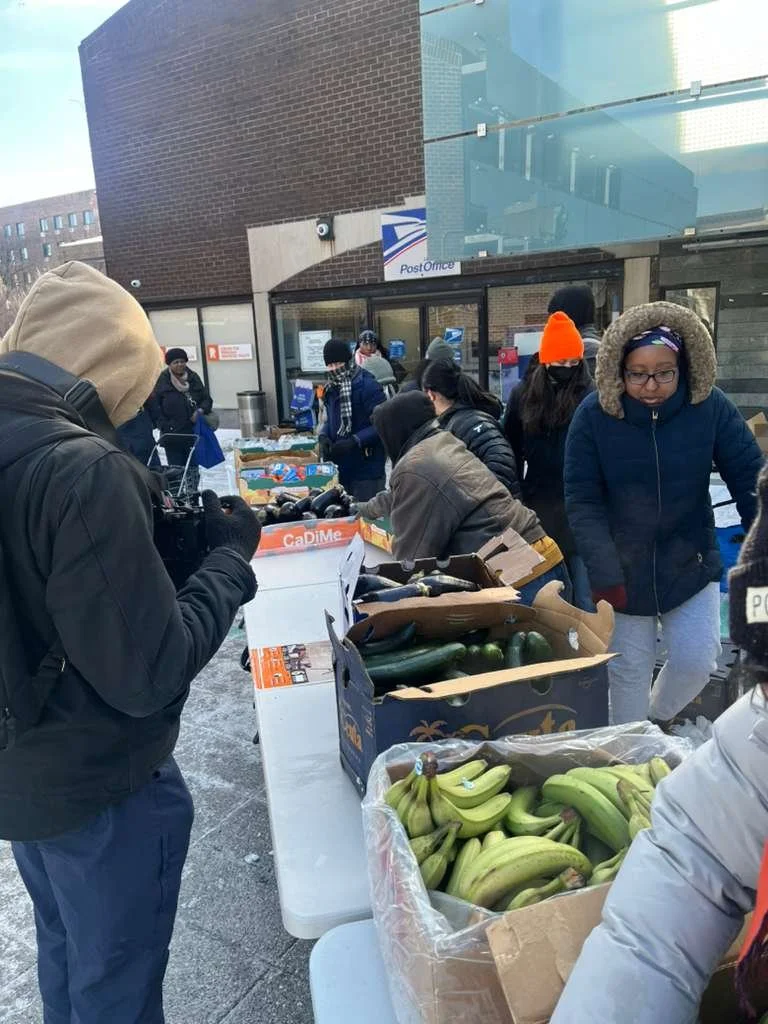
Last month, early on a Saturday morning, I volunteered at a food distribution in Brooklyn.
My body protested that I stayed in bed, but my mind was triumphant, and I made my way out the door. By the time I arrived at Fulton Plaza around 10 a.m., the air was frigid. The 14 degrees were sharp enough to make me question why I am still living in New York. I expected to be among the first to arrive. Instead, I was surprised to find several volunteers already there.
Most of us were bundled head to toe: gloves, scarves, thick coats, hats pulled low. Despite the sub-zero cold, the energy was warm. People greeted one another easily, kindly. Although some were regulars and others, like me, were there for the first time, the place felt welcoming, and we all felt part of the same thing. A few lived just up the block or nearby in Bed-Stuy. Others had traveled from as far as Mount Vernon, a 90-minute-plus journey, simply to show up and lend a hand.
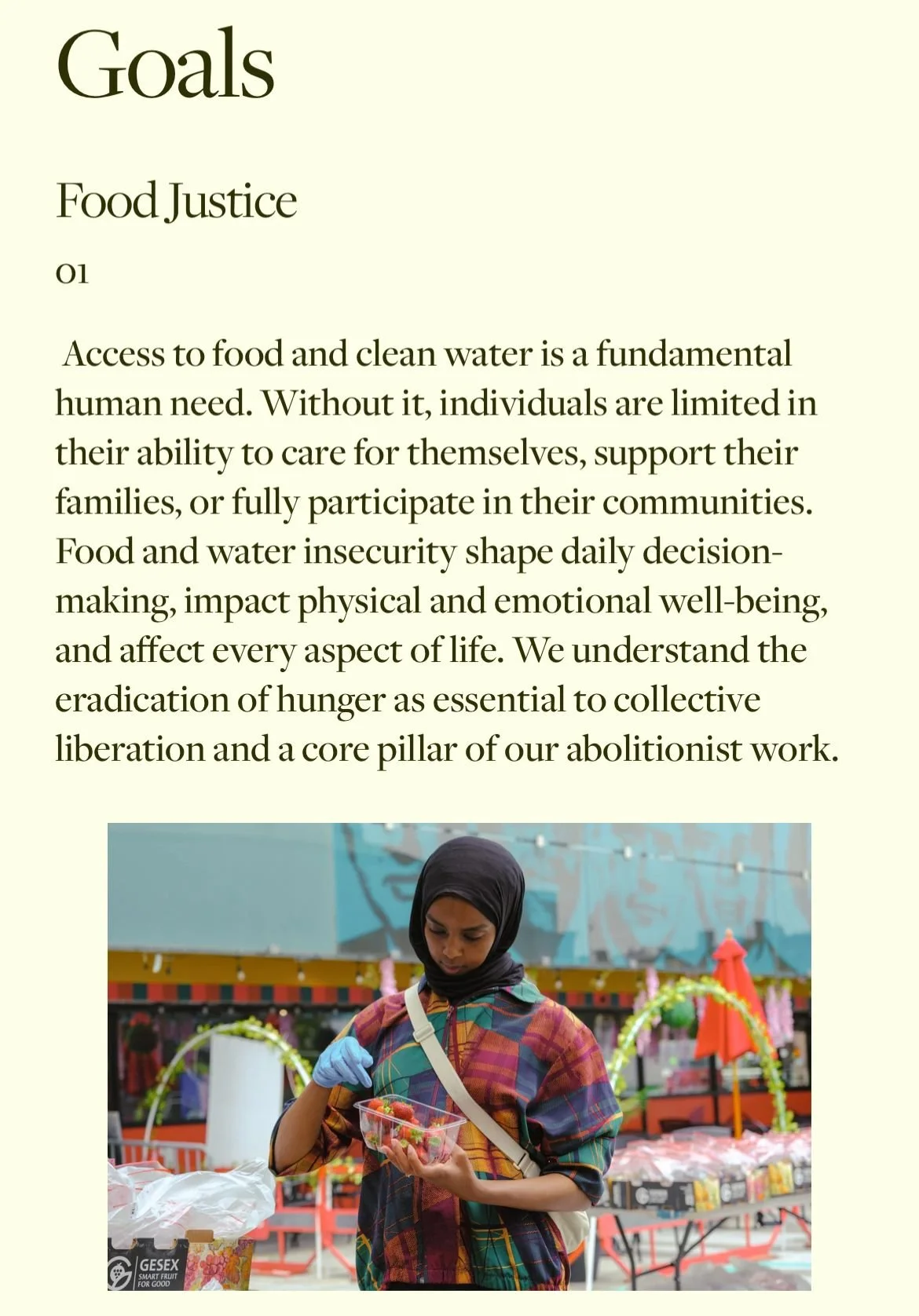
The food distribution was organized by Seeds of Liberation, a local nonprofit focused on food justice initiatives and accessible community education. Their monthly distribution at Fulton Plaza runs so smoothly that it has clearly been refined over the years.
After quick introductions, we split into groups. Some volunteers retrieved folding tables from storage. Others went inside the plaza’s main lobby to bring out the food. The work moved instinctively, as if we were all united in something unspoken. We didn’t rush, but we were mindful of the cold, of each other’s capacity, and of the time.
Most importantly, we were aware that people from the community, elders especially, would be relying on us to be ready before they arrived. No one wanted them standing outside in the cold for even a minute longer than necessary.
Once everything was set up, we moved on to inspecting the food. Oranges, bananas, blueberries, lemons. Eggplants, cucumbers, tomatoes. Anything bruised or blemished was discarded so that people could leave with the freshest food possible. While some volunteers sorted produce, others broke down boxes, cleared trash, and ensured the space remained open and accessible. I was the trash man! I've always had an affinity for breaking down boxes and sorting them away like tetris.
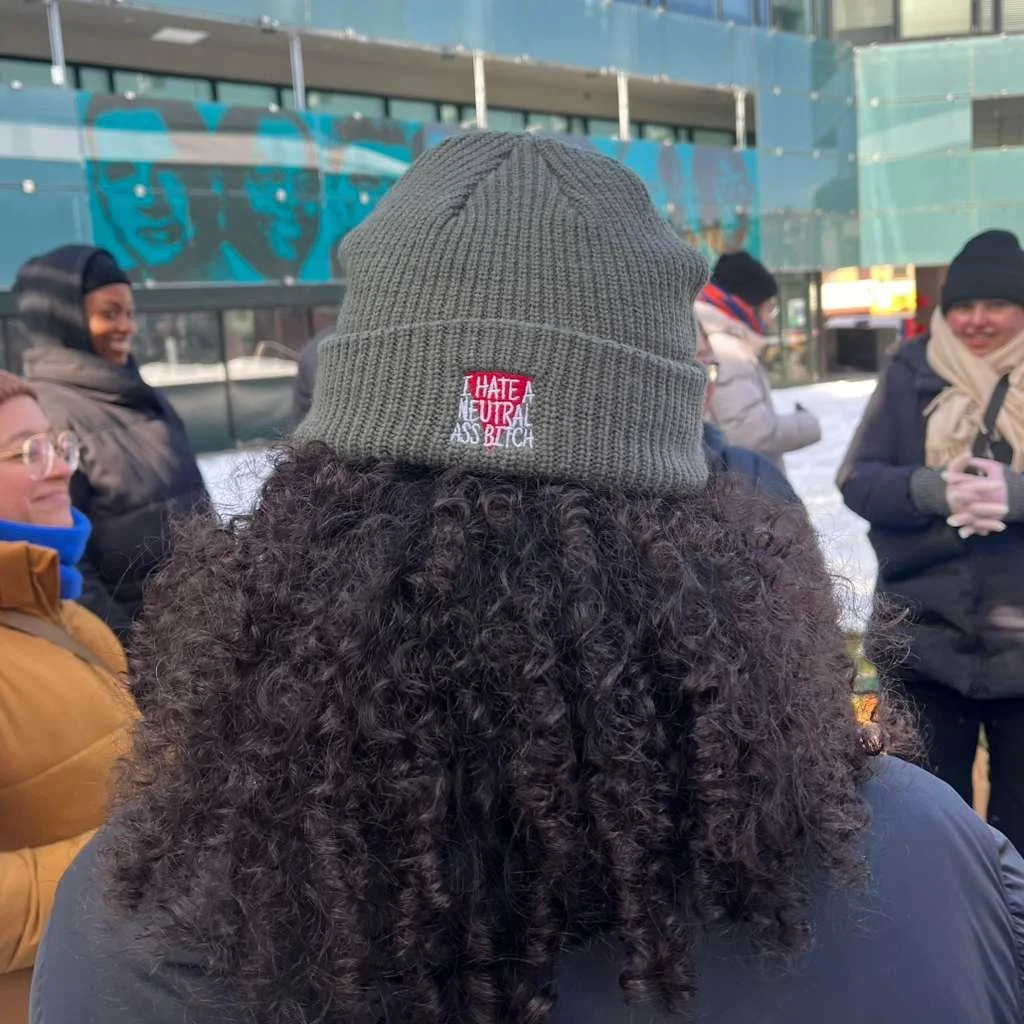
Watching it all unfold was quietly moving. People from different backgrounds, different neighborhoods, different ages and experiences, working together with ease toward a single goal: to provide as much food as possible to as many people as possible.
A few volunteers took on solo roles. One guy grabbed a shovel and cleared heavy snowbanks left over from earlier in the week. Another woman walked up and down Fulton Avenue with a bullhorn, announcing to passersby that free food was available and encouraging them to spread the word.
By 12:30 p.m., we were ready.
Members of the community began lining up with grocery bags and totes, collecting what they needed. There was no limit on what people could take, and I was reminded that for some, this distribution is something they look forward to all month. Knowing we had enough food for everyone was comforting.
My toes were frozen the entire time, so next time I’ll invest in wool socks. And there will be a next time. I would do it again without hesitation, with or without wool socks. But Seeds of Liberation is struggling to survive, and support is essential so that next time can turn into many more times. The fact that this is happening is not only heartbreaking, but it also proves that helping others requires support as well. If you can, consider making a contribution.
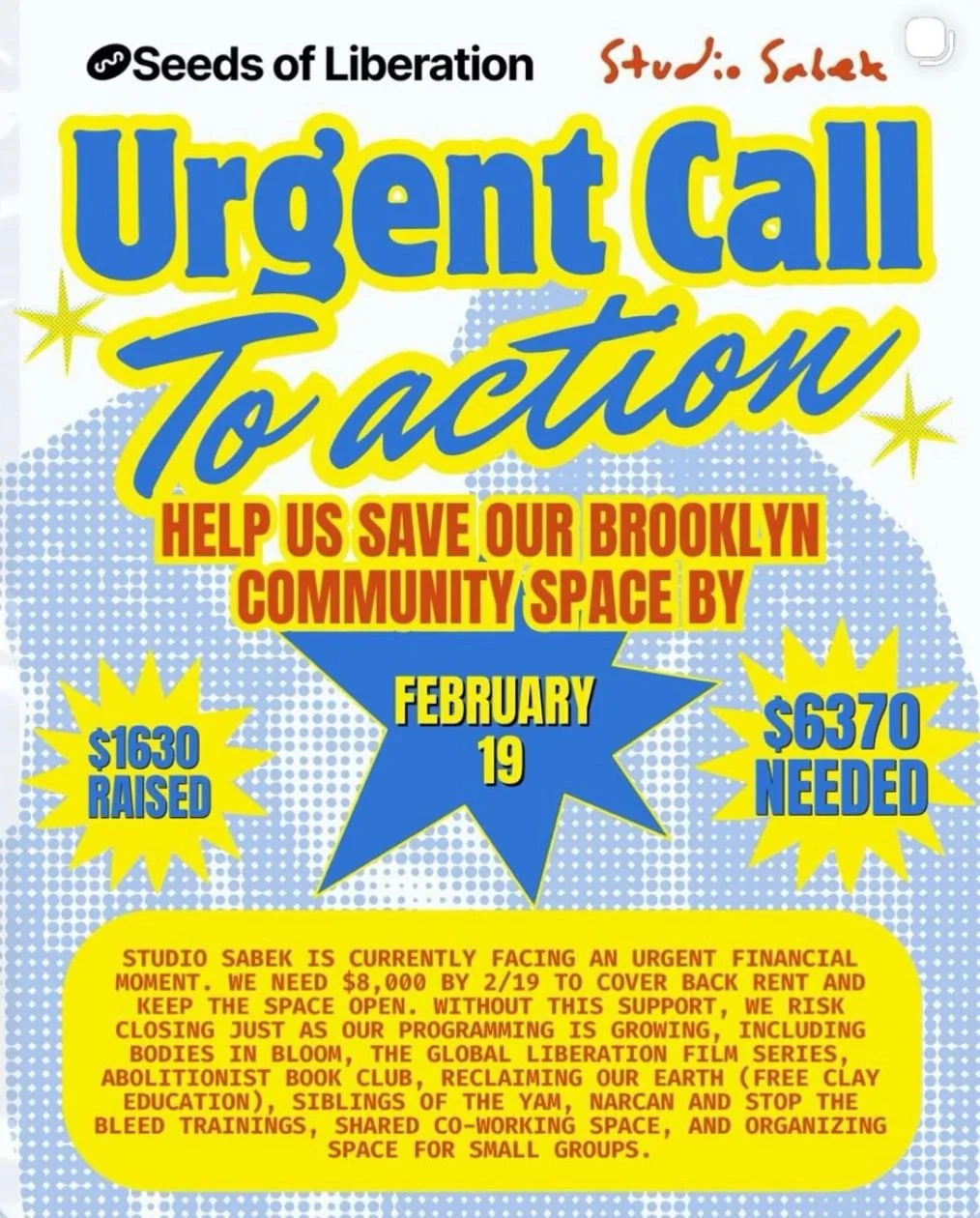
What stayed with me most wasn’t just the work itself, but how accessible it all was. No one was reinventing the wheel. This wasn’t a solo act or a grand gesture. It was a group of people showing up for something that already existed, something rooted in the neighborhood, something that works. And perhaps that is what real change is about: not believing it is so immense that it paralyzes us. Change is real and tangible, and together we can weave networks of support. From one network of support to another, real change is forged. Every social transformation begins as something that seems small.
We can all be doing more for our neighbors and the communities we share space with. And sometimes it’s true that we don’t act because we don’t know how to begin or what to do. But we don’t have to do it alone. There are organizations like Seeds of Liberation, often right near us, doing the work consistently, thoughtfully, and with care. If we’re able, we can join them in person. If we can’t, we can support them financially. Either way, participation matters.
Volunteering that morning reminded me that community isn’t abstract. It’s built in small, cold mornings, in shared labor, in showing up.