One Hundred Years in Prison: A Precedent Aimed to Kill Democracy
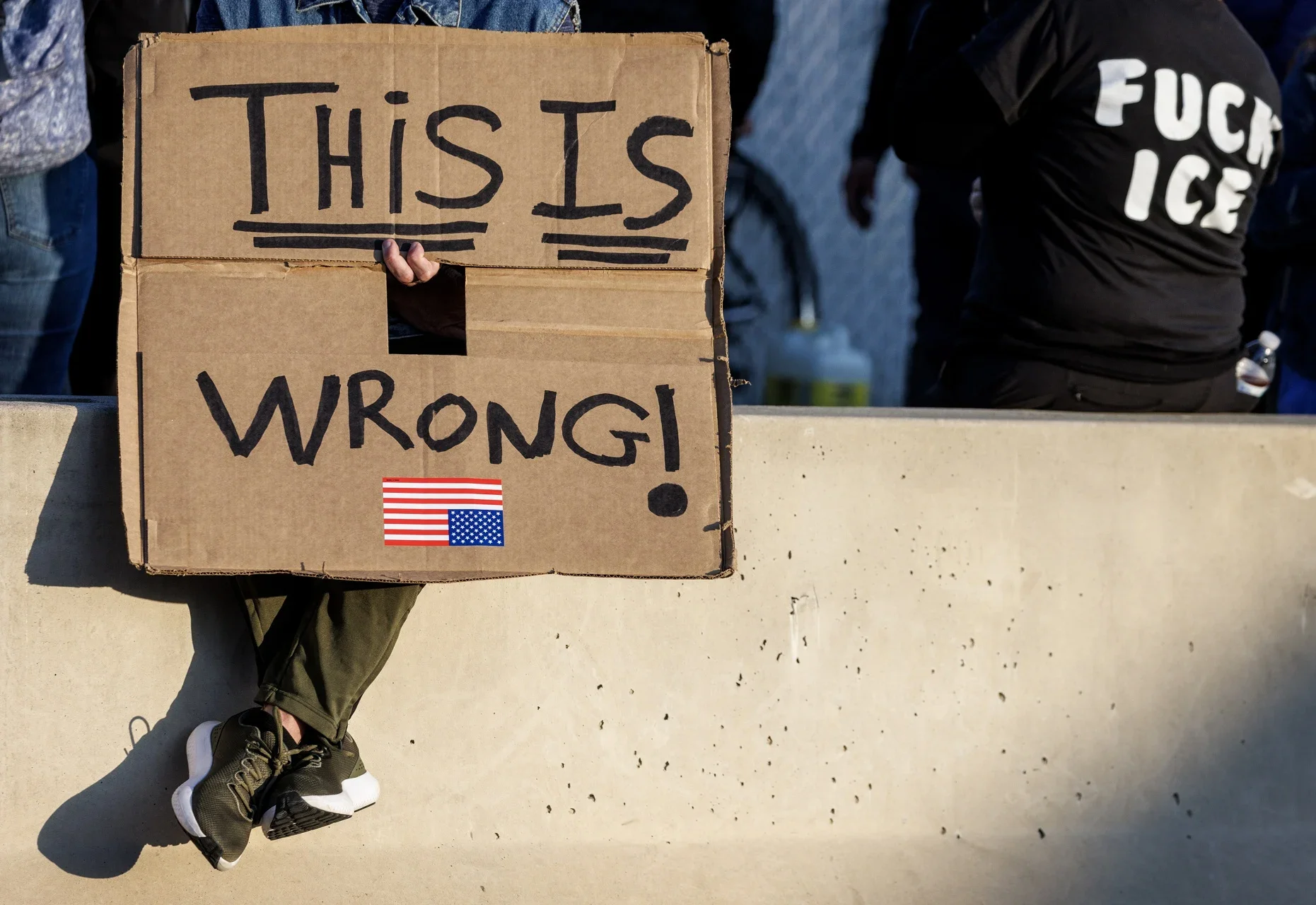
Sign. Via Yahoo
A man got sentenced to 100 years in prison this week. Seven other people got 30, 50, and 70 years apiece. Their crime, in the government’s own words, was being “antifa”—a word that has no legal definition, no membership roster, no headquarters, and no leadership, because it isn’t an organization. It’s a stance rooted in antifascism. And the government just proved you can sentence people to a century in a federal prison for holding one.
On July 4th of last year, a group of about a dozen people showed up outside the Prairieland Detention Center in Alvarado, Texas— an ICE facility—to stage what they called a noise demonstration for the immigrants detained inside. By the end of the night, a police officer had been shot, and the government had decided it knew exactly what kind of people these were: antifa. This week, eight of them were sentenced to between 30 and 100 years in federal prison for holding that label. I’m not here to relitigate the night. I’m here to tell you what those sentences mean for every single one of us who has ever shown up to a protest, posted a black square, donated to a bail fund, or said the word “abolition” out loud.
This is bigger than eight defendants. This is a test run for something far more sinister and reaching.
Here’s the part that should stop you cold: the longest sentence ever handed to anyone anyone for the January 6th insurrection, an actual armed mob that stormed the U.S. Capitol to overturn a presidential election, was 22 years—given to Proud Boys leader Enrique Tarrio. That sentence later got wiped out via a pardon on Trumps first day in office. Twenty-two years, then erased, for trying to violently overturn American democracy. Thirty to one hundred years, with appeals already being fought, for a handful of people the government decided to call “antifa and domestic terrorism.” Sit with that math. That is not a justice system calibrating punishment to harm. That is a justice system calibrating punishment to who you are and what the state has decided you represent.
And here’s how they got there: in September, the administration signed an executive order declaring antifa a “domestic terrorist organization”. There’s just one problem: that designation does not actually exist anywhere in American law. It can’t. The First Amendment doesn’t let the government outlaw a belief system, so instead they wrote a new definition of “domestic terrorism” —National Security Presidential Memo 7— broad enough to swallow one anyway: broad enough to include “anticapitalism,” broad enough to include “extremism on migration, race, and gender.” Read that again. A federal directive now treats caring about race as a measurable step toward terrorism. Once an ideology counts as terrorism, the government doesn’t need to prove you belonged to anything.
Nicole Robinson, a political law attorney, told The Root exactly what this is built to do: “The concern is that this sends a signal to any organization or individual looking to protest that they need to stay home, be quiet and not speak out. People may fear facing conviction even when they believe they are exercising their First Amendment rights.” That’s not a side effect. That’s the design.
We have seen this exact machine before, and it was built for us.
In 2017—nine days before white nationalists marched on Charlottesville with torches —the FBI quietly invented a new domestic terror category: “Black Identity Extremists.” No group by that name existed. None. It was, in the words of a former DHS counterterrorism official who reviewed the document, “a new umbrella designation that has no basis.” The FBI tied it to Black Lives Matter and to Ferguson anyway, sent it to thousands of police departments, and let local cops decide what to do with the implication. When Congress finally forced the FBI to admit they’d dropped the label in 2019, leaked documents later showed they hadn’t stopped— they’d just renamed the surveillance program and kept running it.
Before that, it was COINTELPRO. Same machine, older paint job: the FBI spent decades surveilling, infiltrating, and sabotaging Martin Luther King Jr., the Black Panther Party, Malcolm X, the Student Nonviolent Coordinating Committee—not because a statute named them, but because the label “subversive” did whatever work the government needed it to do. Before that, Ida B. Wells and Marcus Garvey were tracked and harassed as “race agitators” for refusing to shut up about lynching and self-determination.
The label changes. “Race agitator.” “Subversive.” “Black Identity Extremist.” “Antifa.” The machine underneath never changes: take an ideology, declare it a coordinated threat, and let the declaration do the work that actual evidence of conspiracy is supposed to do. It gets built and tested on whoever is politically convenient first. Then it gets pointed at whoever’s next.
We are watching it get built and tested right now. It is not pointed at us yet. That is the only difference between this week and the next time.
So sound the alarm. Loudly. And then get strategic, because fear without strategy is exactly what they’re counting on.
This is the moment to fund the legal infrastructure that fights designations like this before they harden into precedent—the ACLU, the National Lawyers Guild, your local bail funds. Precedent set against a movement we’re not part of today is precedent waiting for us tomorrow.
This is the moment to get serious about how you organize—what you say in group chats, what you post, what gets photographed—not because you did anything wrong, but because a federal case can now be built around a vibe and a hashtag, not just a conspiracy.
This is the moment to refuse the fear they’re trying to instill. Robinson said it best: Black people have a history of not being fearful of the federal government, but showing up anyway, because we know protest is one of the only tools that has ever forced this country to change.
They want you scared and quiet. History says we don’t do quiet. We just do it informed, this time. Eyes open, knowing exactly which playbook this is, because we’ve read this chapter before.