
A Failed Effort in Resurrecting Imperialism
Donald Trump takes back claims on Greenland.
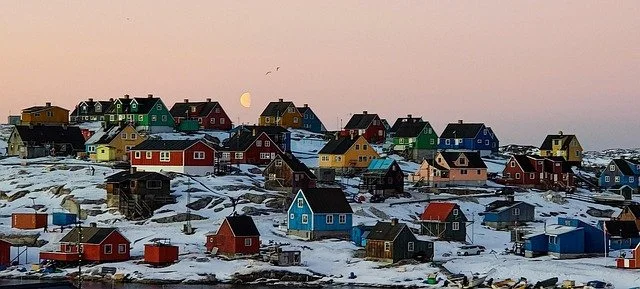
via Pixabay seth7225
Trump has been clear about setting his eyes on Greenland. With the melting of its ice caps and its strategic positioning, Greenland has become an increasingly attractive objective for the US president.
In AHUS’ January 12 publication, Zinthia Álvarez Palomino spoke about the toppling of the Venezuelan government and argued, “it enables a more rigorous analysis of how sovereignty, justice, and legitimacy are unevenly distributed across global power relations rooted in the historical subordination of Abya Yala, especially to the United States.”
The effort to take Greenland is an extension of this claim. It requires an in-depth look at not only the “why” but also the “how”.
The propaganda machine has been halted temporarily. Trump, Stephen Miller, and the rest of the administration have been clear about their perspective: “Greenland should be part of the United States. The United States is the power of NATO.” It is this belief, the subordination of the world to the US, that persists. NATO’s creation was predicated upon avoidance. The avoidance of another world war was paramount, and superpowers agreed that they would protect themselves from each other. Now, Trump has already begun to say that the United States hasn’t benefited from its participation in NATO, which we have. After the September 11th attacks, the United States invoked article five of NATO. Allies, for the first and only time since NATO was formed, utilized Article 5. In the years that followed NATO formed their first ever terror operations–to ensure the skies over the States were safe and the other to enact anti-terrorist activity at sea.
Miller seems to consider the US as the only superpower. In a rant with CNN’s Jake Tapper, it was unclear if he was discussing Venezuela or Greenland, but he did share this–a perspective that makes it easy to understand the demand for more land. “We’re a superpower, and under President Trump, we are going to conduct ourselves as a superpower.”
Targeting Greenland is an exercise in expansionism. It’s an aberration of sovereignty and a denial of justice. Greenlanders don’t want it. US citizens don’t want it. NATO doesn’t want it. But, with a president who treats the world like a monopoly, none of this matters.
Presenting it as “security”, the US has pulled another ragged page from a familiar novel: we are in danger, and everything our military does is in pursuit of safety. Efforts include defending against Russia and China, names that consistently bring fear to the United States. After centuries of being marketed as threats, these names are now reliable triggers; the administration knows that simply uttering them will rally their “fanbase” into a frenzy.
The Subordination to the United States
The how is clear. Deputy Chief of Staff for Policy and Homeland Security, Stephen Miller, puts it succinctly, “No one is going to fight the United States militarily over the future of Greenland.”
…