
The Betrayal Inside the House
Betrayal is an interesting concept, although it rarely announces itself as such. It just quietly rearranges what you thought you could count on. Betrayal is a violation of trust from someone you least expect. A promise is broken. The psychological impact lingers. The harm can be irreparable. And often, it triggers the betrayed to eventually betray others (or themselves).
Last year (May 2025), I was betrayed in the worst way. Not by the lover I’d had for almost two years. Not by recent friendships or those going back three decades. (Those only strengthened with time.) No. This betrayal came from inside the house.
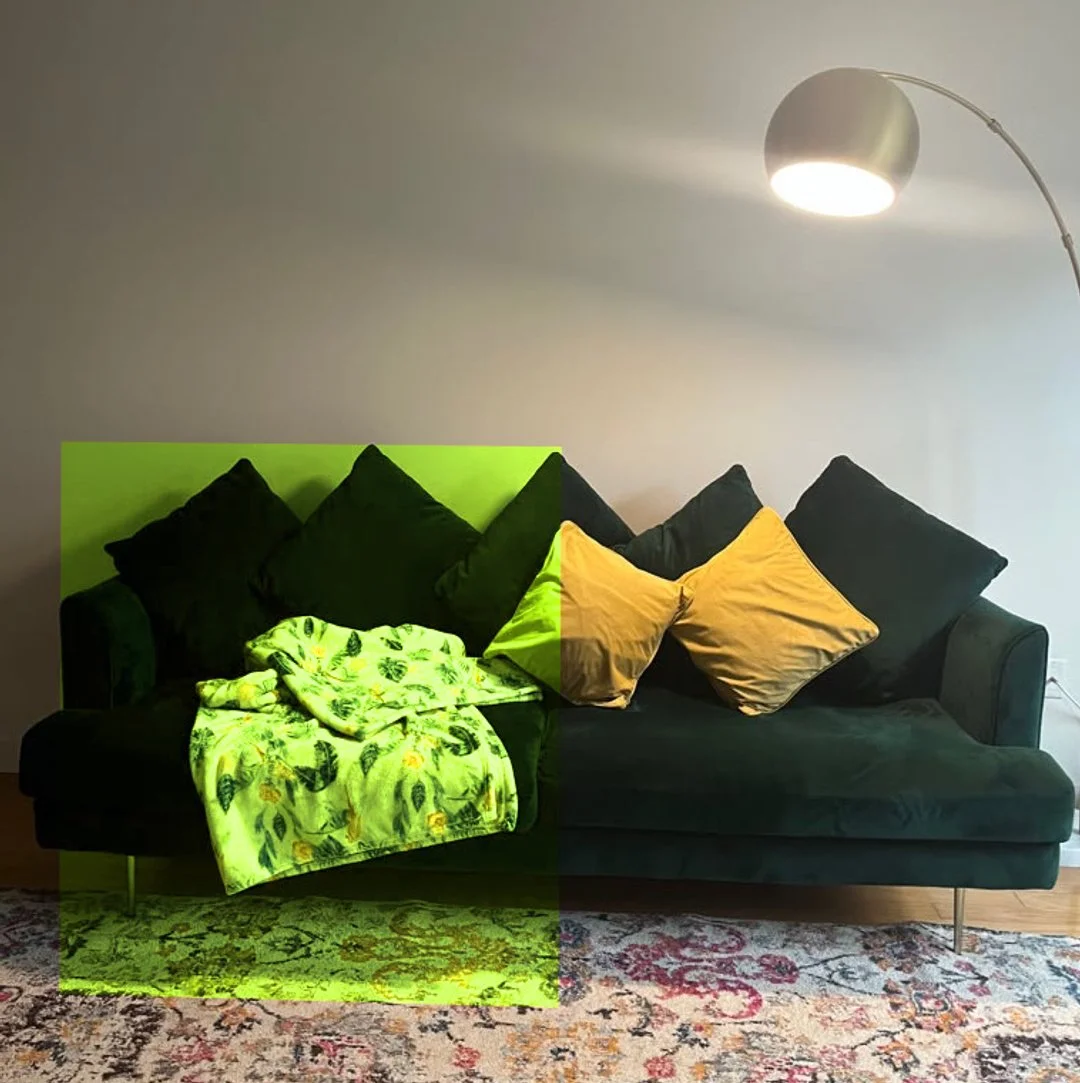
And it happened on my emerald green couch in the living room.
I stood up the way I’ve stood up for forty-two years. Both legs performing their respective duties, elevating me off the ground to rise closer to the air above. My left knee that night however didn’t get the memo. A pop was audible. The pain arrived on my face before I could pinpoint where it had come from. davidwalkerscat (my bengal cat) shrieked and scurried from the room. Ironically, I laughed instead of cried when it happened. (The crying would come much later. And often.)
It felt like I’d struck the funny bone of my knee. The next day — urgent care. The next week — an orthopedic visit. The month after that — an MRI. And then the results: a torn meniscus, and a surgery I hadn’t planned for. I stopped laughing after that.
I’d been doing everything right, which is its own kind of joke in hindsight. I ate clean. Kept my weight down. Gym a few times a week. Biked through Prospect Park regularly. None of it mattered. My body betrayed me anyway.
This betrayal would again resurface in ways no MRI could ever show.My doctor was confident, and I was apprehensive, but I was also trusting. Seeing Dr. Swindell for a third time made me see myself in him: he was also Black, dark-skinned, of similar age and build, versed in code-switching, a survivor of a PWI (predominantly white institution), and battle-ready for the operating room and the concrete jungle. Him from Detroit, me from Brooklyn. The only difference was that I sat in the patient’s chair. He assured me as if he were assuring himself. That was enough.
He advised me to have one final hurrah before my date with the knife on June 16th. So I had several. With my bestie-Black-cane, by my side, I bopped along within my neighborhood and buoyed throughout Brooklyn’s borders. A night with my lady. Another night with some friends. Pastry shopping in Prospect Heights, listening bars in Williamsburg, and rounds of drinks and delicious wings in Bedstuy. The New York nightlife was telling me to turn up, but my body was telling me the opposite. Ultimately, I made a toast with those closest to me, clinking our glasses to my return.
Surgery day arrived. The doctor gave me the rundown one more time as I sat up in the bed in my hospital scrubs. I signed the anesthesia form, hugged and kissed mom, and orderlies wheeled my bed down the pale white linoleum halls. I wasn’t nervous. I was ready, ready to get it over with, ready to start physical therapy, ready to be myself again.
I woke up a couple hours later. The doctor called it a success, whatever that meant. A leg brace sat where my left knee used to move freely. A makeshift appendage I needed but did not want. I was discharged, placed in a wheelchair, and rolled out the hospital exit. And soon enough I was back home. Back on the couch where everything had happened. Back in my head. Back to my thoughts of where the betrayal occurred. It wasn’t forgotten.
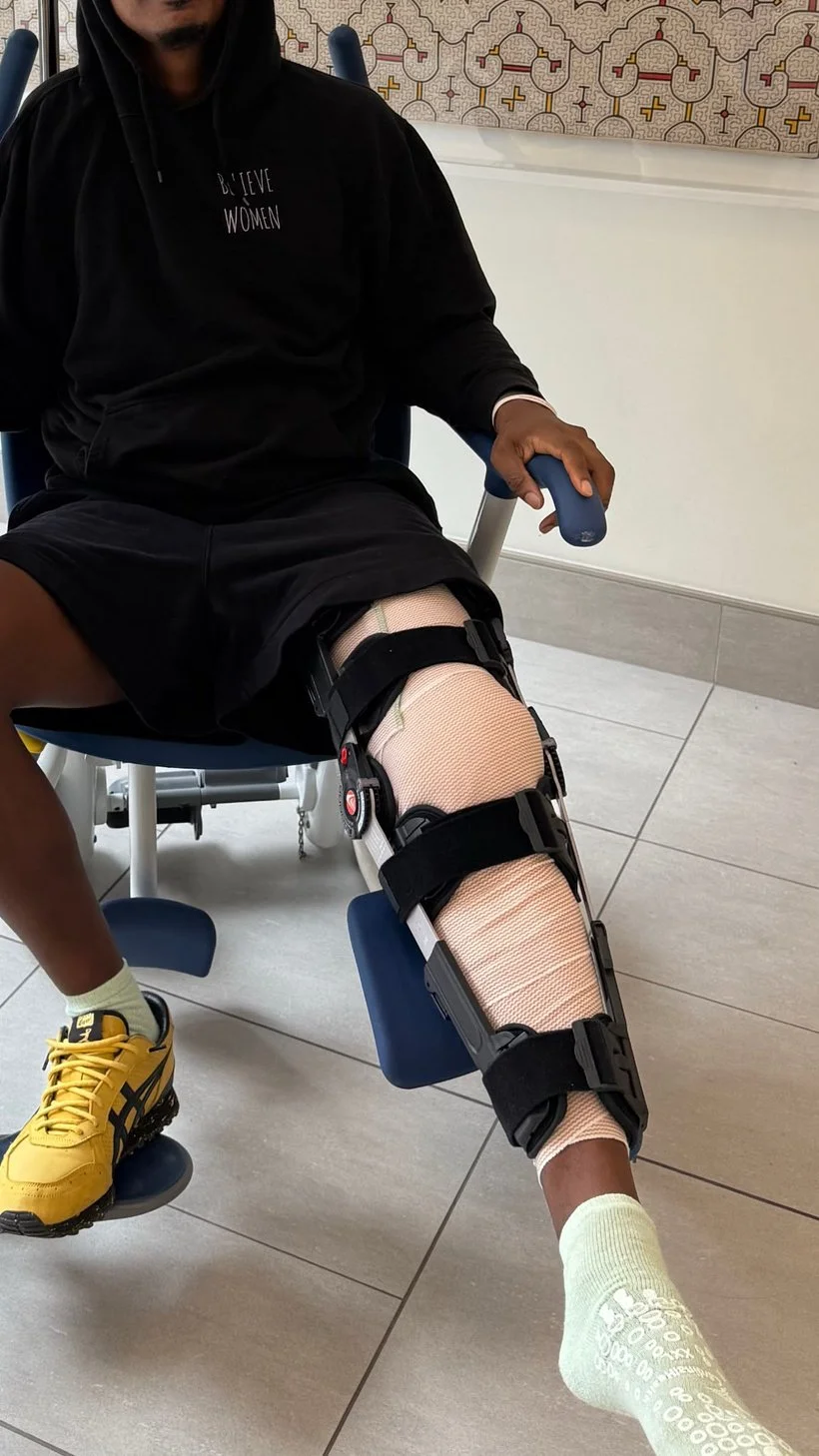
Along with the crutches came a pamphlet telling me what drugs (oxycodone, ibuprofen, docusate, omeprazole, senna, etc.) to take and when. What it didn’t say was that the surgery was the easy part. Oxycodone dulled everything into a soft, manageable fog at first. But then came the slow, humbling negotiation of coming off it, while the pain hadn’t gotten the fax that it was supposed to leave too. I rationed what I had, mostly so I wouldn’t get too dependent, and partly in case they refused to refill it. (They refused when I asked.) At the beginning, there were a lot of hard and restless nights where ibuprofen wouldn’t cut it. I wanted the pills back the way you want anything that made a bad thing quiet. That’s its own lesson. I won’t pretend I learned it gracefully.
Depressed, some days, in the plain, undecorated sense of the word. I learned to walk again. Each week, I physically relearned how to put one foot in front of the other. The way you did the first time, I imagine. But with an entirely different timeline and audience. Slow and steady, Mike, the head physical therapist, reminded me this was a marathon. His staff stretched and bent and twisted me at my pace and ability. That allowed me to push myself with each session to go a bit further than the last. Completing a full revolution on the stationary bike brought me to tears, knowing the week before I had hardly gone halfway.
Physical therapy wasn’t a breeze, but I can’t say I hated it. It gave me something to push against twice a week, which was more than I could say for the other five days, most of which I spent on the green couch, watching reruns of The Office and developing a new addiction: Love Island. I needed motivation, and I got it. I decided, early on, to trust the PT staff completely, mostly because I didn’t have the energy left to do anything else. That trust turned out to be one of the better decisions of the year. Encouragement is a renewable resource if you let the right people supply it.
And then, almost as if the year wanted to see what else it could stack onto a man just getting his literal legs back under him: a two-year relationship, healthy and adult and genuinely good, came to an end. A relationship and a person still dear to me that I could not just file it under everything else that happened. I got to dance with a courageous woman, a giant in her own field, who showed me gentleness and generosity both in front of and behind closed doors. It taught me that love doesn’t require timelines or benchmarks, only steady support and stability. It taught me I was deserving of love despite my worst qualities and capable of pouring that same love into someone I was dedicated to. It was its own loss, with its own weight, and it deserves better than to get lost in a list.
Around the same time, I watched AHUS, the lifestyle brand I’d built, brick by brick, start to hemorrhage. Sales drying up. My own creativity and enthusiasm were drying up right alongside it, though I still couldn’t tell you which one was the cause and which was the symptom.
The betrayal, it turned out, had brought something else in with it. A disease. A disease no textbook has ever named. I’m going to name it now, because naming a thing is usually the first act of surviving it: pretendinitous.
It develops the way any chronic illness develops: slowly, quietly, with no single dramatic symptom to give it away. You don’t complain. You don’t harp, not even a little. You answer, “I’m fine” with just enough conviction that the people who love you believe you, because you’ve made it so easy for them to. And its cruelty is elegant in its simplicity: the less you show, the less anyone can offer. You suffer in silence, mostly alone, while everyone around you assumes you’ve gracefully weathered the storm.
I didn’t know I had it until after the surgery, after the check-ins and the phone calls started to thin out.
Friends and family had come in real waves. You know, the kind that show up with bacon, egg, and cheese sandwiches and bad jokes and the willingness to sit through an afternoon that isn’t going anywhere. And then, the way waves do, they’d recede, and I’d be alone with a knee that didn’t work and a mind that had far too much room to wander into places I didn’t love visiting. Saddened, but I explained it away. My summer being ruined didn’t mean everyone else’s had to be. I understood. I was hurt by the isolation, the broken promises, the no-shows. But I understood.
Eventually I was walking again, and I didn’t want this new version of me to spend his second chance complaining about what he hadn’t gotten or blaming the people who’d let him down. That’s the real effectiveness of pretendinitous. It made me betray myself. It stopped me from advocating for my own needs, from telling anyone I was hurt.
Wear a brave face. Carry on. No sense crying over spilled milk. So I got off the couch and tried my damndest to start taking care of others instead.
My role in the interim turned me into a pseudo-caretaker for many, which was an honor for me. I was somewhat mostly healed: able to lightly jog, do squats and lunges, and bike ride in the park again. So I embarked on a new quest to heal others or come close trying. Admittedly, I was in deep gratitude for those that showed up for me, so I wanted to pay it forward. (As I was taught.)
Last fall found me in Prague, my third visit to a fantastical city but nothing like the ones before it. A dear friend, Kristýna, was healing from a double mastectomy, trying to outrun a fate that had taken her mother around the time we met in 2019. I brought her groceries and small comforts from home. She wore a brave face, similar to the one I’d been wearing all year. I recognized it instantly, and hated that she felt she had to. I gathered it was just instinctual: performing strength for the people who love you rather than risk becoming their burden. From Brooklyn to the Czech Republic, pretendinitous didn’t need a passport.
Winter came next, and Texas is where I was called. My cousin, Adrian, who had always had my back, needed me to have his. His health was failing, he was on dialysis, and his closest kin were not close at all. I didn’t get to see much of Austin, but the time out there was precious in its own way. Just being there for him, listening to his larger-than-life stories, and telling preposterous ones of my own filled my cup. I got to learn more about him during our weekly trips to dialysis, washing and folding his laundry, and taking his daughter to school every morning. We connected because we prioritized his health, and that allowed space for being vulnerable and being honest. I intended to show up for him as friends and family showed up for me. And ways that they didn’t.
My mother, back in New York, was having issues of her own: heart and hearing. My next few weeks turned into months with constant doctor visits, hard news to bear, harder decisions to make. I kept giving what I had left to the people I loved while quietly running low on whatever I was supposed to be refilling myself with. Then, later that month, the flood came.
I was in Austin when I got the call. A neighbor reached out and told me our apartment was flooding, followed by a two-minute video of the water crashing down heavily to the ground floor. My apartment was on the third. A strange calm settled over me. My cat, at least, was safe, staying with a dear friend, Ashley, while I was away. The only thing left to worry about was everything I owned. I gave my neighbor the code to my place.
He described it as devastating, with water ankle-high and my dining table and rug and chairs visibly ruined. But the couch, remarkably, was still dry. Untouched. The irony didn’t escape me that the couch wasn’t thrown out with the bathwater.
I stayed in Texas another week because my cousin and his six-year-old daughter needed me, and there was no version of rushing home that would have undone the damage. I sat with the loss of a home I’d tended to for fifteen years without ever having seen what was actually left of it. I hurt before I even knew what I was hurting over.
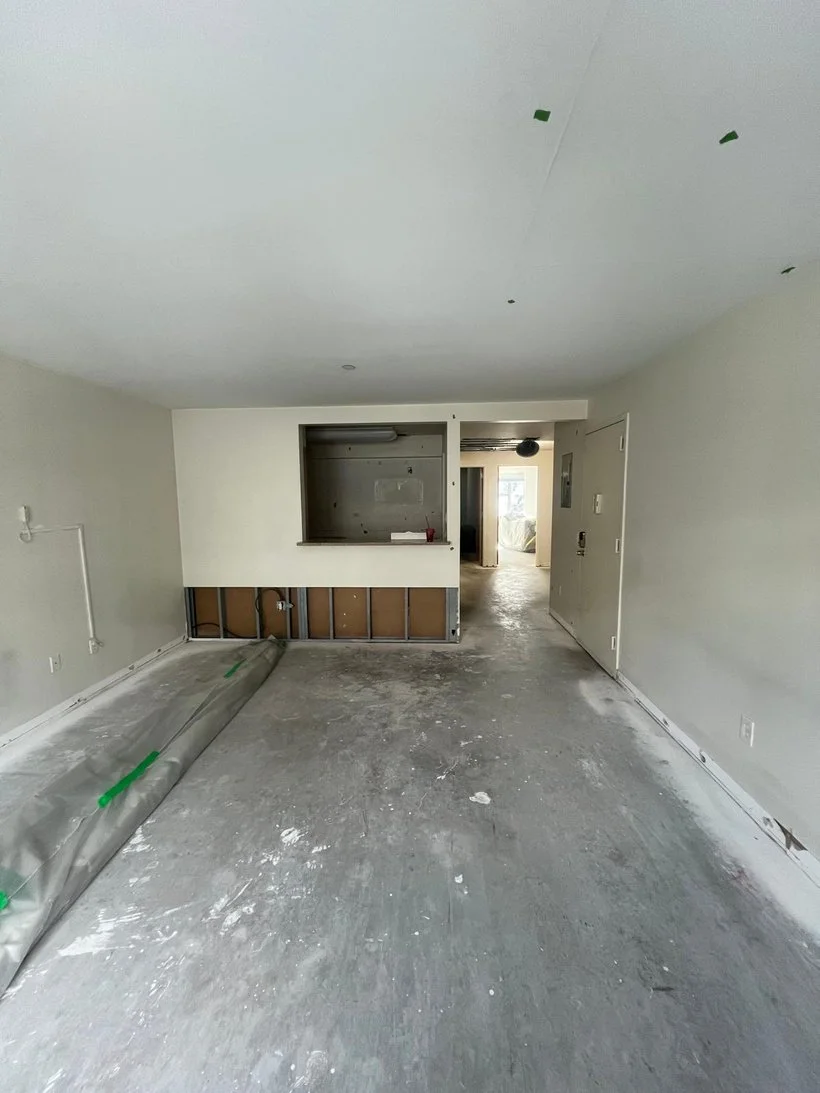
When I finally returned, I didn’t recognize the place. I was awe-struck and also filled with deep grief. How much will this cost me? How long will it take to repair? Where will I call home in the meantime? I felt like a stranger stepping into it for the first time. It no longer felt like home.
Floors stripped. Walls and ceilings water-damaged. Whatever furniture survived was packed into storage. Four-plus months of hotels and sleeping on other people’s couches followed. Living out of bags was my life, absent any real stability. I saw my cat, dwc, sparingly and felt the guilt of a deadbeat parent scheduling visits around everyone else’s convenience. Losing my grip is how I’d describe it now. Not dramatically. Not all at once. Just a slow loosening of everything while I kept telling anyone who asked that I was doing okay.
Pretendinitous was in full bloom. I had it bad. I’d built an entire architecture of “fine” around a year that was, by any honest measure, not. The worst part is how well it worked. People believed me. I made sure of it. Pride got in the way, which aided my convincibility. So did ego. So did some old, stubborn belief that needing help was for people who had less than me. And that irrational belief paired with the idea that if someone appears okay on the surface, they must not be struggling in private.
Therapy is where the diagnosis finally got said out loud. I couldn’t hide or perform as well in front of Marcus, my therapist, on Zoom as I did in front of loved ones. My jokes and deflections there weren’t as potent. It’s okay that you’re not okay. I’d heard that sentence a thousand times, in a thousand contexts, and never once believed it applied to me. Underneath it was something even more useful: this is allowed to be temporary, for exactly as long as it needs to be. No deadline. No shame in the length of the recovery.
Here’s what got me fucked up: the couch survived. Ankle-deep water took the dining table, the rug, the chairs, the stove, the fridge, etc., it literally took the floor out from under fifteen years of my life, but somehow the one piece of furniture left standing had already seen the worst of me. The place where a knee gave out. The place I came home to on a brace and a friend’s shoulder. The place I sat alone more nights than I told anyone about.
I’m not fixed, because pretendinitous doesn’t work that way, and neither does a torn meniscus, or the grief of a good relationship ending, or a brand finding its footing again, or a mother’s heart, or a friend healing on the other side of an ocean. Some of that is still healing. Some of it will be healing for a while yet. I’ve found a way to make peace with that timeline.
What I know now that I didn’t know last May is that the betrayal I opened with was never really about a knee. According to my doctor, a body failing you is just biology. The deeper betrayal was my own, which cost me the most. A debt, a price far too high to repeat. Remaining true to myself, I have found, best aids me in being vulnerable with others.
The version of me who smiled through check-ins, that let waves of people recede without asking a single one of them to stay, and that decided his own hurt wasn’t worth the inconvenience of naming. I don’t do that as easily anymore. I stopped assuming people could see what I never let them see. I started being honest with myself and asking for help directly. I gained strength in admitting I wasn’t indestructible and had no business ever claiming to be.
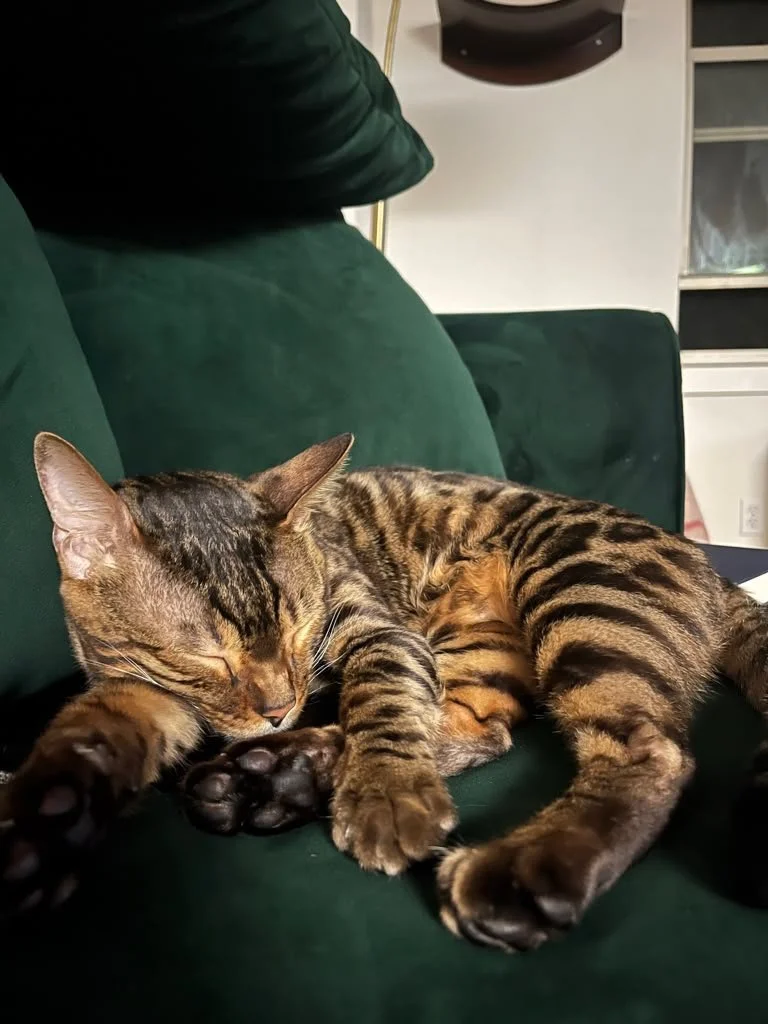
The apartment is starting to feel like mine again. davidwalkerscat has reclaimed the couch, and some nights, so have I, and it doesn’t feel like the site of a betrayal anymore. It just feels like home.
I’m learning to say so out loud. Everything! Asking for help when I need it, saying things are harder than they seem, etc.. And for the first time in a long while, I believe someone’s listening.
Updates:
- The friend in Prague has fully recovered and is proud that she did all she could to prevent breast cancer
- My cousin in Austin had a successful kidney transplant and is now recovering at home
- Mom is doing well and her heart and hearing have improved
- I tore my meniscus again (in June) while writing this piece and am scheduled for a second surgery this month
- I turned 44 last Sunday