
Between Shelter and Deathtrap: Displaced Palestinians Take Refuge in Gaza’s Damaged Buildings
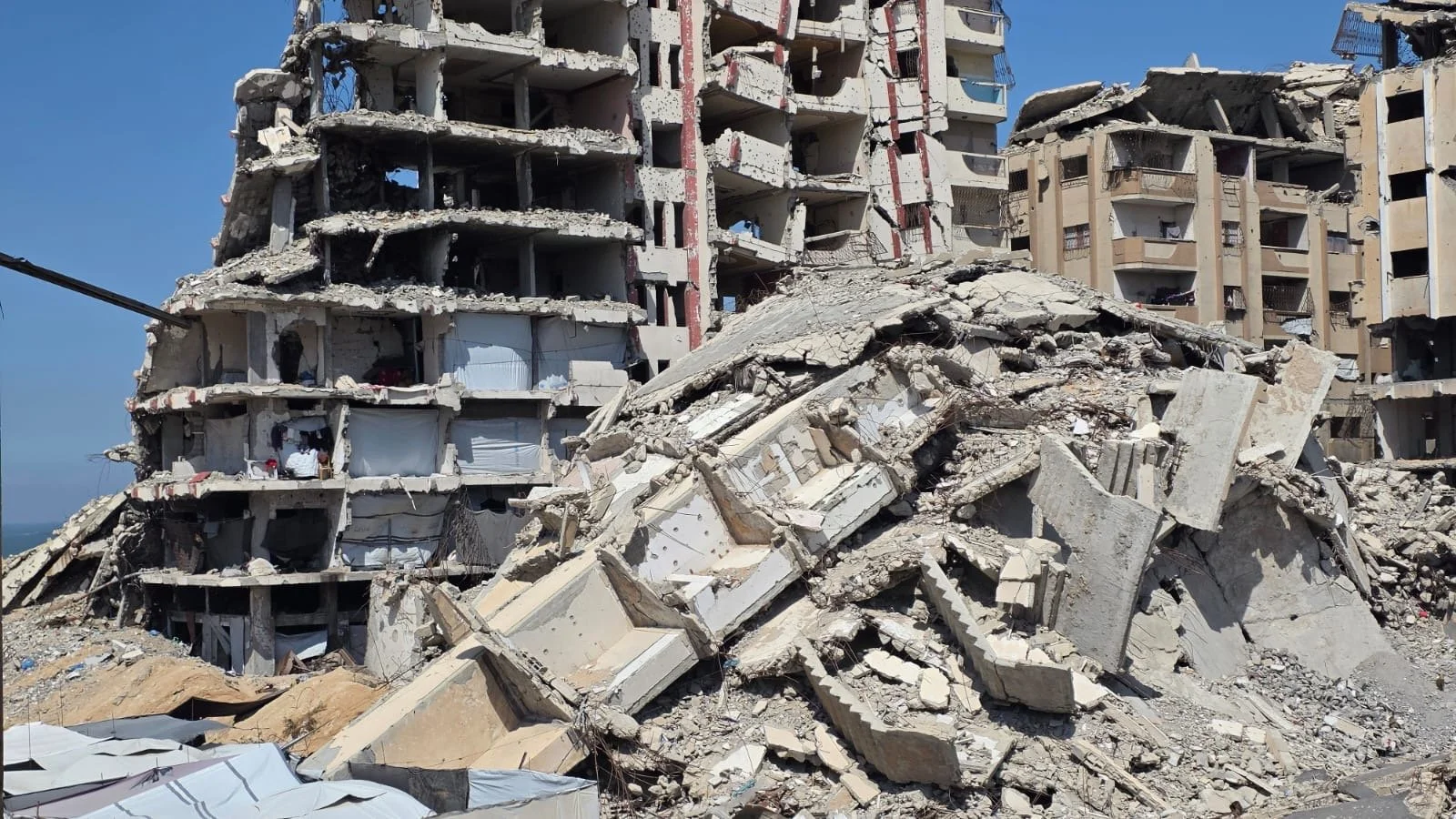
Like ticking time bombs, buildings damaged by Israel’s ongoing bombardment across the Gaza Strip, many of which are now at risk of collapse, pose a growing threat to the lives of thousands of displaced Palestinians. With tents and shelters in critically short supply, winter approaching, and building materials and equipment needed to clear rubble and carry out rescue operations difficult to obtain, many displaced families have been forced to seek refuge inside these damaged buildings”.
Despite the danger, hundreds of families have been forced to make these damaged buildings their homes after losing their own or finding nowhere else to go. Each night, they lie down beneath cracked ceilings and beside weakened walls, knowing that the very structures shielding them from the elements could collapse on top of them while they sleep. Yet leaving means facing the cold, rain, and exposure of sleeping in the open. For these families, finding a place to spend the night has become a choice between shelter that could turn into a grave and an open sky that offers little protection.
In a cracked house west of Gaza City, Mazen Al-Khalidi (55) lives with his family amid constant fears that the building sheltering them could collapse.
He says: “Where are we supposed to go? We have nowhere to shelter. Are we supposed to live in the street? There are elderly people in this building who cannot bear living in tents. In summer, the heat is unbearable, and in winter, the cold is bitter. The harsh and difficult conditions leave us no choice but to stay here despite the danger.”
“Every night, the worst thoughts come to us. We go to sleep and wake up fearing that the building will collapse on us and that we will spend hours trapped under the rubble. If we do not die from the war, we will die from these ticking time bombs,” he adds.
Buildings Turning Into Potential Graves
Fears among residents are growing as incidents involving the collapse of damaged buildings continue, underscoring that the danger posed by structures at risk of collapse is no longer a distant possibility, but a direct threat to displaced people living inside them.
In the early hours of Wednesday, September 16, a residential building came down, killing 21 people, including 12 children and five women, and injuring dozens more.
Two days later, another building collapsed in Gaza City’s Al-Sabra neighborhood, injuring seven displaced residents who were inside.
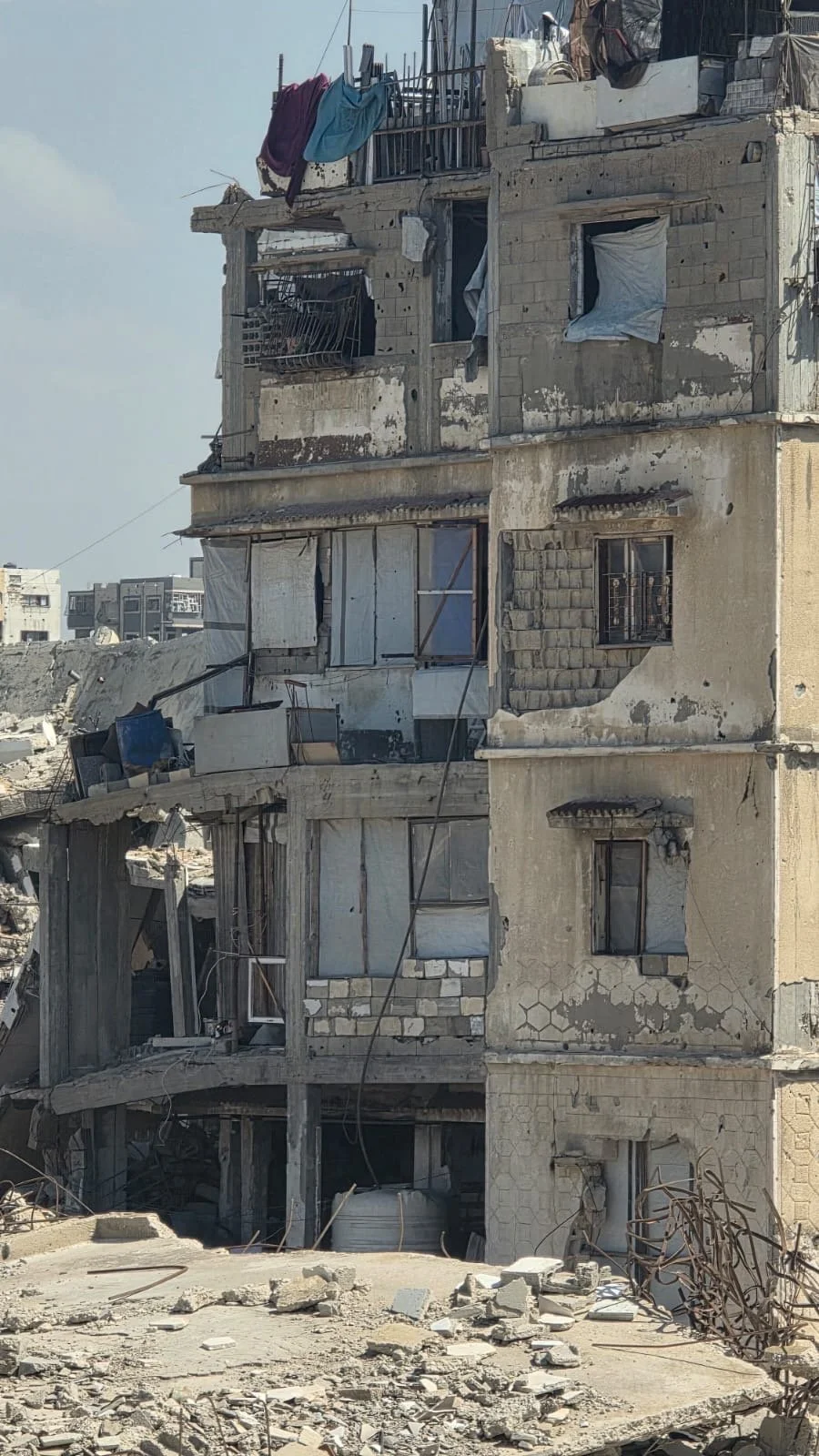
Other families continue to live in damaged buildings, aware that remaining there could put their lives at risk, but with nowhere else to go.
In one of the cracked houses in Al-Karama neighborhood west of Gaza City, Manal Awda (40) lives with her four children and elderly mother. She has covered parts of the house with tarpaulins in an attempt to shield the family from the weather. The weather in Gaza is shifting into autumn, with nighttime temperatures beginning to drop as winter approaches, potentially falling to around 50°F. In a house already weakened by damage, the falling temperatures add to the hardship facing families with little protection from the elements.
“Sometimes I put my ear against the wall and hear a faint sound, as if the house is groaning. I do not know whether I am imagining it or whether the walls are actually cracking before they collapse,” Awda says.
She explains that she and her family have tried several times to leave the house, but could not find a suitable alternative.
“We went to the tents and set them up along Gaza’s seashore, but the high temperatures and harsh conditions made it impossible for us to stay for long. So we came back here, because despite everything, this is our home,” she says.
Fear Follows Them Into Sleep
Awda and her children live with the constant fear that the roof or walls could collapse. She says she sometimes wakes up before the rest of the family to check on her children, then continues monitoring the house.
“If I manage to get a little sleep, I wake up in the morning before everyone else, check on my children, and spend the night watching the ceiling, waiting for any movement or sound. Sometimes I hear tiny pieces of concrete falling, so I immediately get up and gather my children around me,” she says.
The family no longer sleeps in the same place inside the house. Awda says they have moved their sleeping arrangements several times in an attempt to stay away from the most damaged sections. “We have moved where we sleep more than once inside the house, trying to choose the least dangerous corners. But the truth is, there is nowhere safe here,” she adds. And it’s not a remote possibility among many, but one of the most likely ones.
“One night, we heard a loud cracking sound coming from one of the damaged rooms. I grabbed my children and rushed outside. We went to a relative’s house and slept there until morning. The shock came when we returned and found that the room had collapsed. If we had stayed in the house, it would have fallen on me and my children,” she says.
Warning of Further Collapses
In a press statement issued on its official Telegram channel on September 28, 2026, Mahmoud Basal, spokesperson for Gaza’s Civil Defense, said the shelter crisis is making the situation more dangerous, as large numbers of people are being forced to live in tents or damaged buildings.
Basal said the Gaza Strip is facing a widespread shelter crisis, with a large proportion of the population living in tents, overcrowded buildings, or damaged homes that do not provide adequate protection.
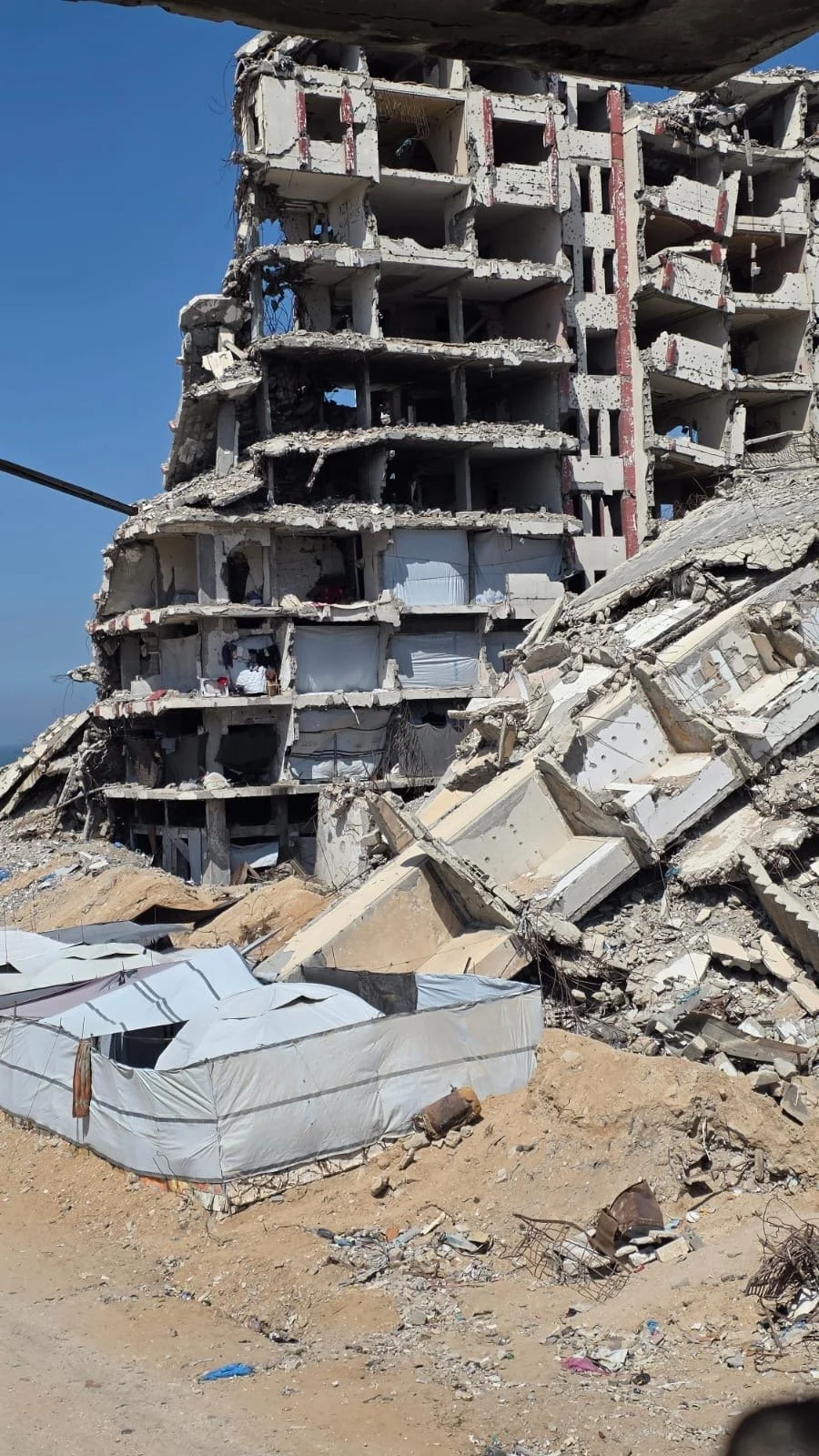
He warned of the danger of further collapses of residential buildings at risk of falling, particularly as winter approaches. Rain, strong winds and other weather conditions could increase the likelihood of damaged buildings collapsing, especially taller structures.
Basal called on international institutions to facilitate the entry of safe, temporary shelters and work to provide displaced people with places to stay, while also pressing for the provision of areas where civilians can seek refuge.
Latest Statistics
Data from the Palestinian Central Bureau of Statistics (PCBS) shows that the ongoing Israeli assault on the Gaza Strip damaged around 201,290 buildings between October 7, 2023, and June 16, 2026, equivalent to approximately 82% of all buildings in the Strip.
In a statement marking World Habitat Day and Arab Housing Day, the bureau said 134,422 of the damaged buildings were completely destroyed, while 13,848 sustained severe damage.
The total number of damaged housing units reached 328,627, according to the same data. These figures show that Gaza’s housing crisis is not only about thousands of families losing their homes. It also means that some displaced people are being forced to return to buildings that are no longer safe, amid the limited options available to them.
These are not buildings that have deteriorated with age or exposure to the elements. They are homes damaged by ongoing Israeli airstrikes across the Gaza Strip, their walls cracked and structures weakened by the destruction of war.
How can people begin to rebuild their lives when they have no safe place to sleep, no roof to protect them, and no certainty that the walls around them will remain standing until morning? For many families in Gaza, this is not a danger they face once in a while. It is part of their daily lives. They live with the constant fear of collapse, knowing at the same time that leaving these buildings could mean facing the cold and rain in a tent or out in the open.
As winter approaches, families like Awda’s and Al-Khalidi’s face two grim choices: remain in tents that offer little protection from harsh weather conditions, or return to cracked and damaged buildings that could at any moment collapse into rubble over their heads.
In a territory whose urban infrastructure has been devastated by war and where the vast majority of residents have been displaced, the danger posed by buildings at risk of collapse is part of a broader crisis defined by the absence of safe shelter. The threat facing displaced people does not come only from bombardment; it may also come from the walls they have sought refuge inside in search of somewhere to sleep.
*Notes:
All interviews were conducted in colloquial Arabic and translated by the author.
Photos provided by the author.
Shaimaa Marwan is a Palestinian journalist from the Gaza Strip who writes human-interest stories documenting people’s lives under war, bringing their voices, pain, and hopes to the world. She believes that behind every news story lies a story worth telling, and that every person has a story that deserves to be heard.